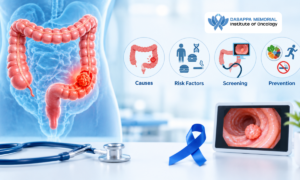
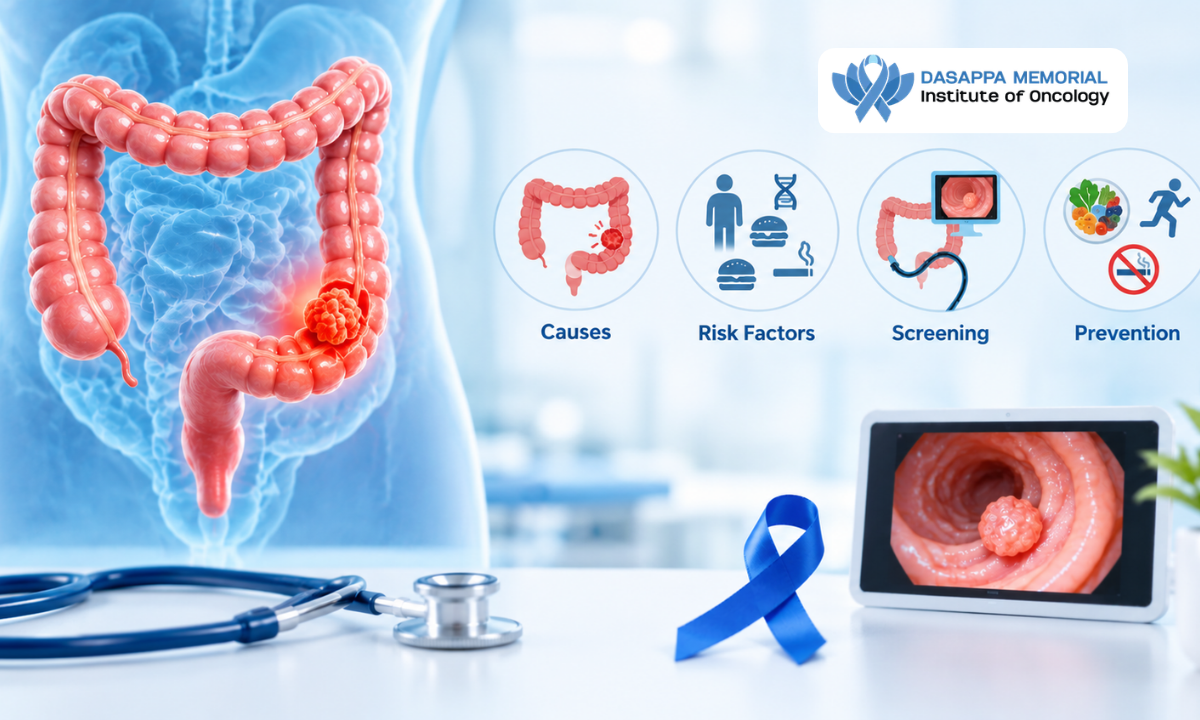
Colorectal cancer is cancer that starts in the colon or rectum, the two parts of the large intestine. Worldwide, it is the third most commonly diagnosed cancer and the second leading cause of cancer death, according to the International Agency for Research on Cancer (IARC).
Rates in India have historically been lower than in Western countries, but they are rising, particularly in cities. Doctors are also seeing more cases in younger adults, which is why timely evaluation at a centre offering gastrointestinal cancer treatment in Bangalore matters.
The good news is that colorectal cancer is one of the most preventable cancers. It usually develops slowly from small growths that can be found and removed before they turn into cancer. This guide explains what colorectal cancer is, what causes it, who is at higher risk, and how screening and lifestyle changes can lower that risk.
What Is Colorectal Cancer?
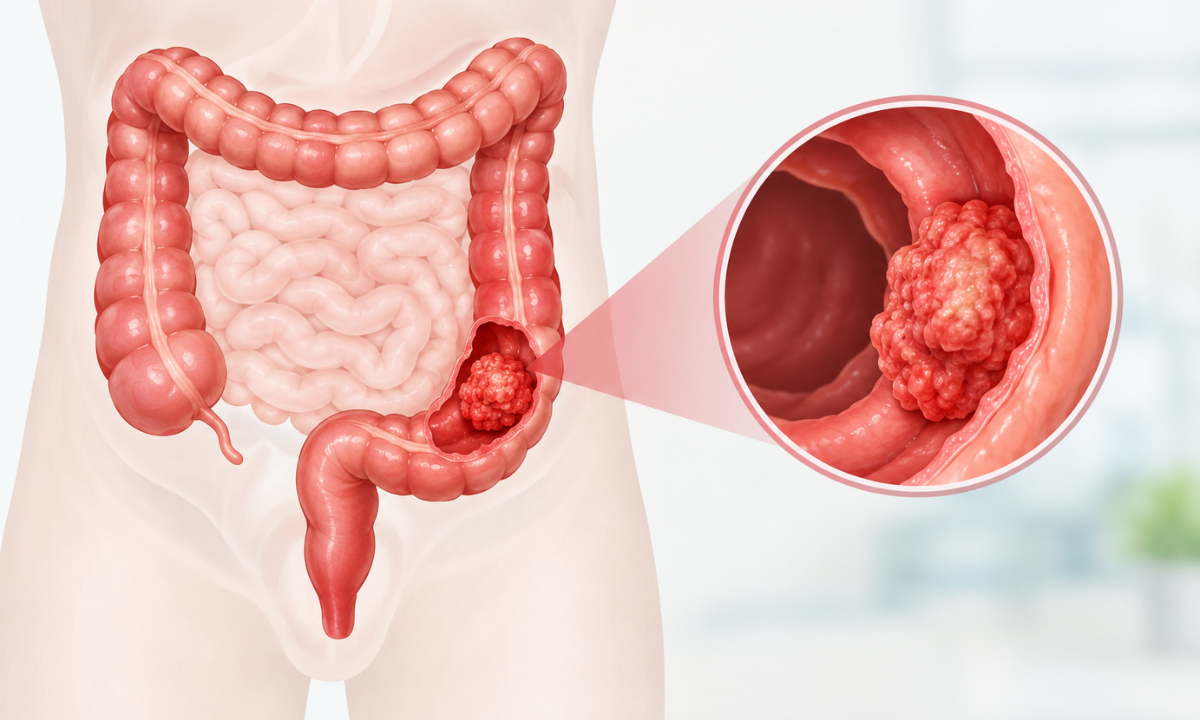
The colon absorbs water and nutrients from digested food, and the rectum stores stool before it leaves the body. Cancer that starts in the colon is called colon cancer, and cancer that starts in the rectum is called rectal cancer. Because they share many features, they are grouped together as colorectal cancer, sometimes also called bowel cancer.
Most colorectal cancers begin as polyps, small growths on the inner lining of the bowel. Not all polyps become cancer. One common type, called an adenoma, can slowly turn cancerous, often over ten years or more. This long window is what makes screening so effective: finding and removing polyps can stop cancer before it starts.
What Are the Main Causes of Colorectal Cancer?
Colorectal cancer develops when changes (mutations) build up in the DNA of cells lining the bowel, causing them to grow out of control. In most people, there is no single cause. Instead, several factors combine over time.
Age and changes in cells
The risk rises with age, as cell changes build up over the years. Most cases are diagnosed after the age of 50, but colorectal cancer can occur at any age, and the number of cases in adults under 50 is increasing.
Family history and inherited gene changes
Having a parent, brother, sister or child with colorectal cancer increases your risk, especially if they were diagnosed young. About 5 to 10% of cases are linked to inherited conditions, including:
- Lynch syndrome: The most common inherited cause. It also raises the risk of womb, ovarian and stomach cancers, so women in affected families should know the early warning signs of gynecologic cancers.
- Familial adenomatous polyposis (FAP): This causes hundreds or thousands of polyps in the bowel, often from the teenage years.
If several relatives have had bowel or related cancers, ask your doctor about genetic counselling.
Inflammatory bowel disease
Long-standing ulcerative colitis or Crohn’s disease affecting the colon increases the risk, particularly after eight to ten years of disease. People with these conditions are usually advised to have regular colonoscopies.
Diet and lifestyle factors
Several everyday factors are linked to a higher risk:
- Processed meat: IARC classifies processed meats such as sausages, ham and salami as a Group 1 carcinogen for colorectal cancer. Each 50g eaten daily is linked to an 18% higher risk.
- Red meat: Large amounts of beef, pork and mutton probably increase the risk.
- Low-fibre diet: Diets low in whole grains, vegetables, fruit and pulses are linked to a higher risk.
- Excess body weight and inactivity: Both increase the risk, particularly of colon cancer.
- Smoking: Long-term smoking raises the risk of colorectal polyps and cancer.
- Alcohol: Regular drinking increases the risk, even at moderate levels.
No single food directly causes cancer. It is the overall pattern of diet and lifestyle over many years that matters.
What Are the Risk Factors for Colorectal Cancer?
In summary, you may be at higher risk if you have:
- Increasing age, especially over 50
- A close relative with colorectal cancer or advanced polyps
- A personal history of colorectal polyps or colorectal cancer
- An inherited condition such as Lynch syndrome or FAP
- Long-standing ulcerative colitis or Crohn’s disease of the colon
- Type 2 diabetes
- A diet high in processed and red meat and low in fibre
- Excess body weight and low physical activity
- A history of smoking or regular alcohol use
Having one or more colon cancer risk factors does not mean you will develop cancer. Equally, people with no known risk factors can still be diagnosed, so symptoms should never be ignored.
Which Symptoms Should You Watch For?
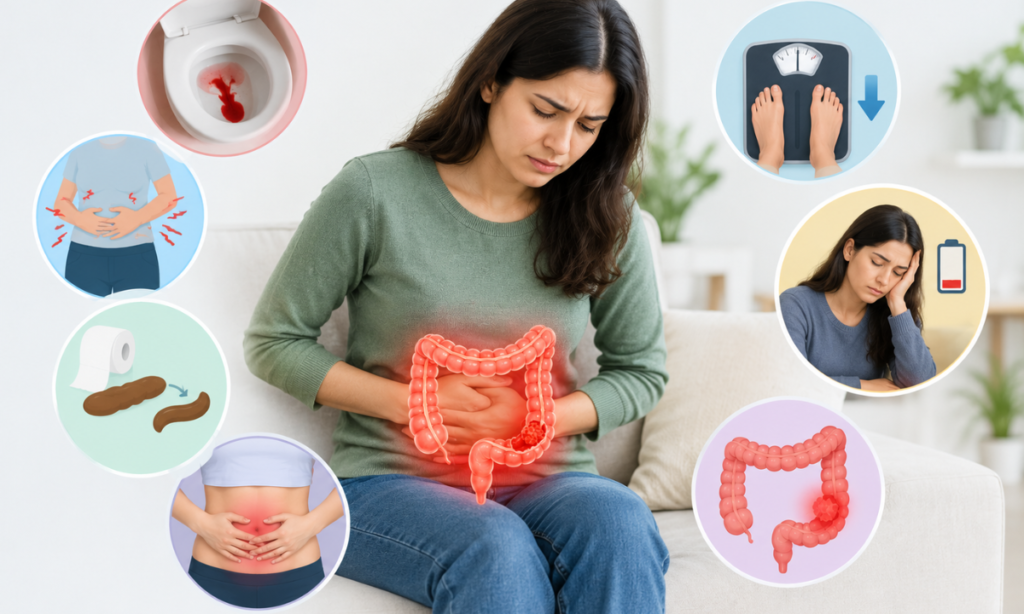
Early colorectal cancer often causes no symptoms. When symptoms do appear, the most common are:
- Blood in the stool or bleeding from the back passage
- A lasting change in bowel habits, such as diarrhoea, constipation or narrower stools
- A feeling that the bowel has not emptied fully
- Persistent abdominal pain, cramps or bloating
- Unexplained weight loss
- Tiredness or breathlessness caused by iron-deficiency anaemia
These symptoms are often caused by piles, infections or other conditions. Rectal bleeding, however, should not simply be put down to piles without a medical check. Ongoing tiredness also deserves attention, so read about when persistent fatigue and weakness needs testing. For a detailed guide to each warning sign, read our article on colon cancer symptoms.
Seek urgent care for severe abdominal pain, heavy bleeding, or signs of a blocked bowel such as vomiting, a swollen abdomen and being unable to pass stool or wind.
How Is Colorectal Cancer Diagnosed?
If you have symptoms, your doctor will usually recommend a colonoscopy. A thin, flexible camera is passed into the bowel to examine the lining, remove polyps and take tissue samples (biopsy) to check for cancer. If cancer is confirmed, CT scans help show whether it has spread, and an MRI scan is used to stage rectal cancer.
It helps to understand the difference between screening and diagnosis. Screening is for people with no symptoms, to find polyps or early cancer. Diagnostic tests investigate symptoms or abnormal results. If you have symptoms, do not wait for a screening test.
Who Should Consider Colorectal Cancer Screening?
Colorectal cancer screening finds polyps and early cancers in people without symptoms. The main tests are:
- Faecal immunochemical test (FIT): A simple home stool test that checks for hidden blood, usually repeated every year.
- Colonoscopy: If the result is normal, it is usually repeated every ten years for people at average risk.
International guidelines, such as those in the US, recommend that people at average risk start screening at 45. People with a close relative diagnosed before 60, or with an inherited condition or inflammatory bowel disease, may need to start earlier and be tested more often.
India does not yet have a national screening programme for colorectal cancer, so it is worth discussing the right test and starting age with your doctor, based on your age and family history.
How Can You Reduce the Risk of Colorectal Cancer?

There is no guaranteed way to prevent colorectal cancer, but these steps can lower your risk:
- Eat more fibre from whole grains, vegetables, fruit, dals and pulses.
- Limit processed meat and keep red meat to moderate amounts.
- Stay active, aiming for at least 150 minutes of moderate activity a week.
- Maintain a healthy weight, especially around the waist.
- Avoid tobacco and avoid or limit alcohol.
- Get screened at the right age, and earlier if you have a family history.
Screening is one of the most effective colorectal cancer prevention measures, because removing polyps stops many cancers from developing.
What Are the Treatment Options for Colorectal Cancer?
Treatment depends on the cancer’s location, stage, test results and your overall health.
- Surgery: The main treatment for most colorectal cancers. Very early cancers may be removed during a colonoscopy, while others need part of the bowel to be removed, often by keyhole or robotic surgery.
- Chemotherapy and radiotherapy: These may be used before or after surgery. Radiotherapy is mainly used for rectal cancer.
- Targeted therapy and immunotherapy: These may be used for advanced cancer, depending on biomarker tests on the tumour. To see how doctors weigh the options in another cancer, read surgery vs targeted therapy.
When colorectal cancer is found early, the chances of successful treatment are very high.
Frequently Asked Questions
What is the difference between colon cancer and colorectal cancer?
Colon cancer starts in the colon. Colorectal cancer is the broader term that includes both colon and rectal cancer.
Can colorectal cancer occur in young adults?
Yes. Although it is more common after 50, cases in adults under 50 are increasing, so symptoms should be checked at any age.
Does blood in the stool always mean colorectal cancer?
No. Piles and small tears are common causes. However, any rectal bleeding should be assessed by a doctor.
Can colorectal cancer be detected before symptoms appear?
Yes. Screening tests such as FIT and colonoscopy can find polyps and early cancers before any symptoms develop.
Is colorectal cancer hereditary?
Most cases are not inherited, but about 5 to 10% are linked to inherited conditions such as Lynch syndrome. A strong family history increases your risk.
Can colorectal cancer be prevented?
Many cases can be prevented through screening and polyp removal, along with a healthy diet, regular activity, a healthy weight and avoiding tobacco and alcohol.
Talk to a Doctor About Your Risk
Understanding colorectal cancer causes and risk factors helps you take sensible steps to protect your health. If you have symptoms, a family history of bowel cancer, or questions about screening, the specialists at a cancer hospital in Bangalore can assess your risk and recommend the right tests. If you are unsure where to go, this guide on how to choose the right oncology care hospital can help.
Schedule a Consultation at Dasappa Cancer Hospital
If you, a patient, or a family member is experiencing symptoms, contact our clinical oncology team in Bengaluru for an expert evaluation:
Hospital Location: Dasappa Memorial Institute of Oncology (Dasappa Cancer Hospital), No. 132, Gandhi Bazaar Main Road, Basavanagudi, Bengaluru, Karnataka 560078
Consultation Helpline: +91 80 2667 9294 / +91 98450 12345
Website: dasappacancerhospital.com
Services Available: Medical Oncology, Surgical Oncology, Day-Care Chemotherapy, Bone Marrow Diagnostics, Second Opinion Consultations.