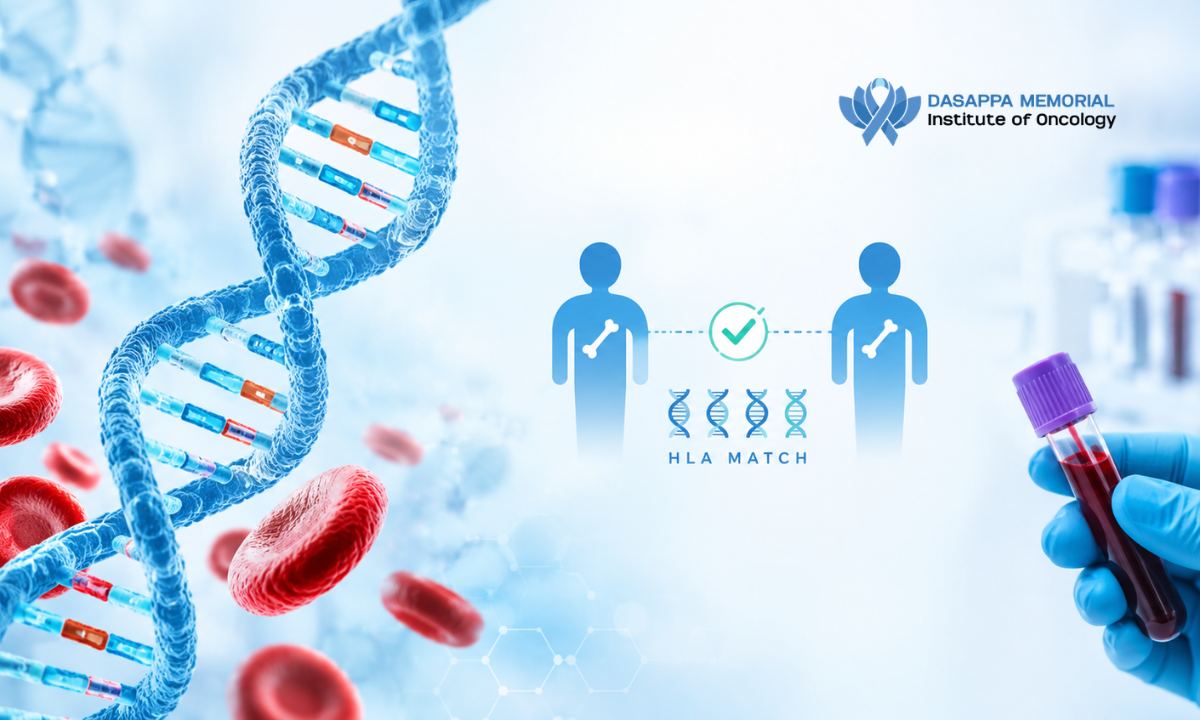
A bone marrow transplant, also called a stem cell transplant, replaces damaged or diseased bone marrow with healthy blood-forming stem cells. It is used to treat conditions such as leukaemia, lymphoma, multiple myeloma, aplastic anaemia and thalassaemia, and it is an important part of blood cancer treatment in Bangalore.
In some transplants, the patient’s own stem cells are collected and returned later. In an allogeneic transplant, however, the stem cells come from another person, a donor. Finding the right donor is one of the most important steps in planning this type of transplant.
This guide explains how bone marrow transplant donor matching works, what HLA testing involves, the different types of donors, and what happens once a suitable donor is found.
What Is Bone Marrow Transplant Donor Matching?
Stem cells in the bone marrow produce red blood cells, white blood cells and platelets. When a donor’s stem cells are given to a patient, they settle in the marrow and begin to build a new blood and immune system.
For this to work safely, the donor’s cells and the patient’s body need to be as compatible as possible. If they are poorly matched, two problems can occur:
- Graft rejection: The patient’s remaining immune system attacks the donor cells.
- Graft-versus-host disease (GVHD): The new immune cells from the donor attack the patient’s tissues, such as the skin, liver or gut.
Donor matching aims to reduce these risks. It is based on HLA markers rather than blood group. A donor and patient can have different blood groups and still be a good match.
What Is HLA Testing for a Bone Marrow Transplant?
What does HLA stand for?
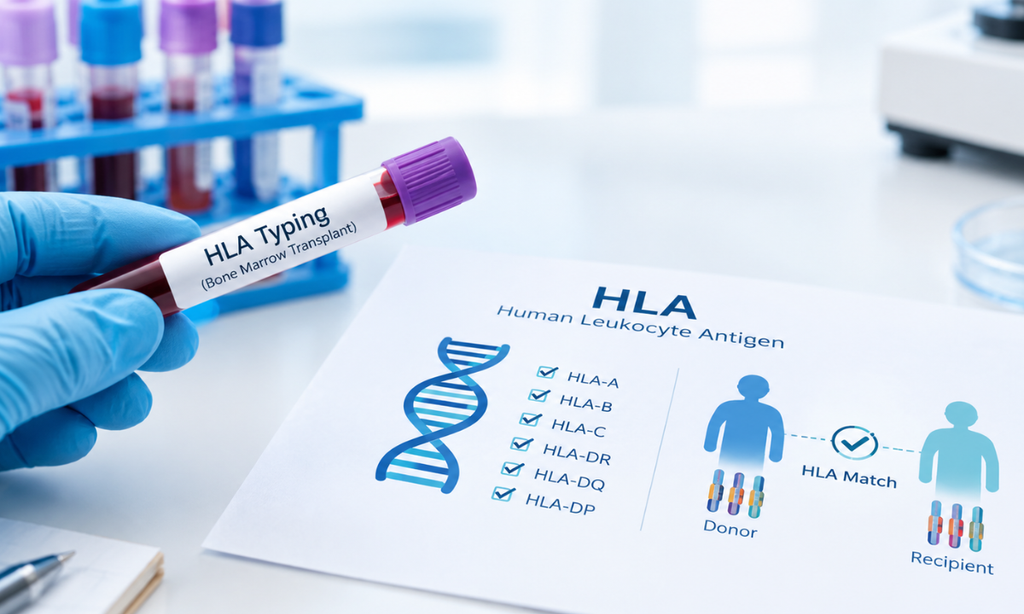
HLA stands for human leukocyte antigens. These are proteins found on the surface of most cells in the body. The immune system uses them to tell the difference between the body’s own cells and foreign cells.
People inherit one set of HLA markers from each parent. Because there are thousands of possible combinations, HLA types vary widely between individuals and between ethnic groups.
How is HLA matching done?
- Sample collection: A blood sample or a cheek swab is taken from the patient and from each potential donor.
- Laboratory typing: The laboratory identifies key HLA markers, usually HLA-A, HLA-B, HLA-C and HLA-DRB1, and often HLA-DQB1.
- Comparison: The donor’s results are compared with the patient’s. A full match on the main markers is often described as an 8 out of 8 or 10 out of 10 match.
- Specialist review: The transplant team considers the HLA match alongside other factors, such as the donor’s age and health, and certain antibodies in the patient’s blood.
Does a perfect HLA match guarantee a successful transplant?
No. HLA matching for bone marrow transplant is important, but success also depends on the patient’s diagnosis, disease status, overall health, the transplant approach and the care received afterwards. Even with a full match, there is still a risk of complications such as GVHD and infection.
What Are the Different Types of Bone Marrow Donors?
Matched sibling donor
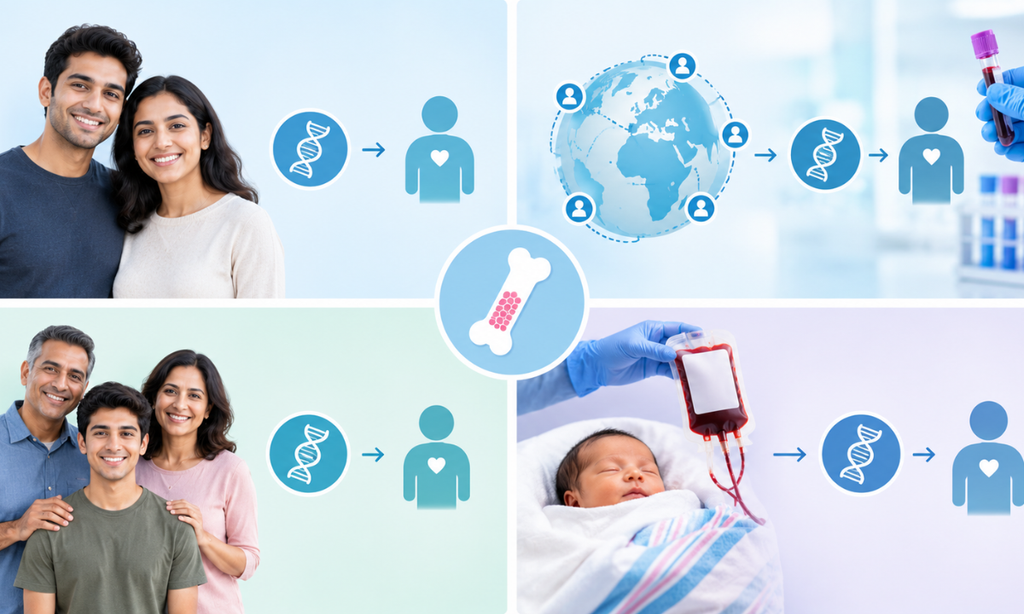
A brother or sister with the same parents is usually checked first. Each full sibling has about a 25% chance of being a full HLA match, so many patients do not have a matched sibling. When one is available, a sibling donor for BMT is often the preferred option.
Matched unrelated donor
If no family member is a full match, the transplant team can search stem cell registries for a matched unrelated volunteer. In India, registries such as DATRI help connect patients with unrelated donors, and searches can extend to international registries. Because HLA types vary between populations, patients of Indian origin are more likely to find a match among donors of similar ancestry, which is why registering more Indian volunteers matters.
Haploidentical or half-matched donor
A haploidentical transplant uses a donor who shares half of the patient’s HLA markers. Parents and children are almost always half matches, and siblings often are too. With newer methods of preventing GVHD, half-matched transplants are now widely used and have made transplantation possible for many patients who have no full match.
Umbilical cord blood
Stem cells collected from a baby’s umbilical cord at birth and stored in a cord blood bank can be used for selected patients. Cord blood does not need to be matched as closely, but a single unit contains fewer stem cells, so it is not suitable for everyone.
What Happens If No Fully Matched Donor Is Available?
Not having a fully matched sibling does not automatically rule out a transplant. The transplant team will consider:
- A search for a matched unrelated stem cell donor
- A half-matched family donor
- A cord blood unit
- In some cases, a transplant using the patient’s own stem cells, or another treatment altogether
The choice depends on the patient’s diagnosis, how urgently a transplant is needed and the risks and benefits of each option.
Who Can Donate Bone Marrow or Stem Cells?
Donor eligibility is decided by the transplant team and, for unrelated donors, by the registry. In general, a donor needs:
- Good general health and a suitable medical history
- To fall within the age range set by the donor programme
- An acceptable level of HLA compatibility with the patient
- Screening tests for infections and other conditions
- Informed consent, given freely
Being related to the patient does not automatically make someone a suitable donor. Younger donors are often preferred when several options are available, but each case is assessed individually.
What Happens After a Suitable Donor Is Found?
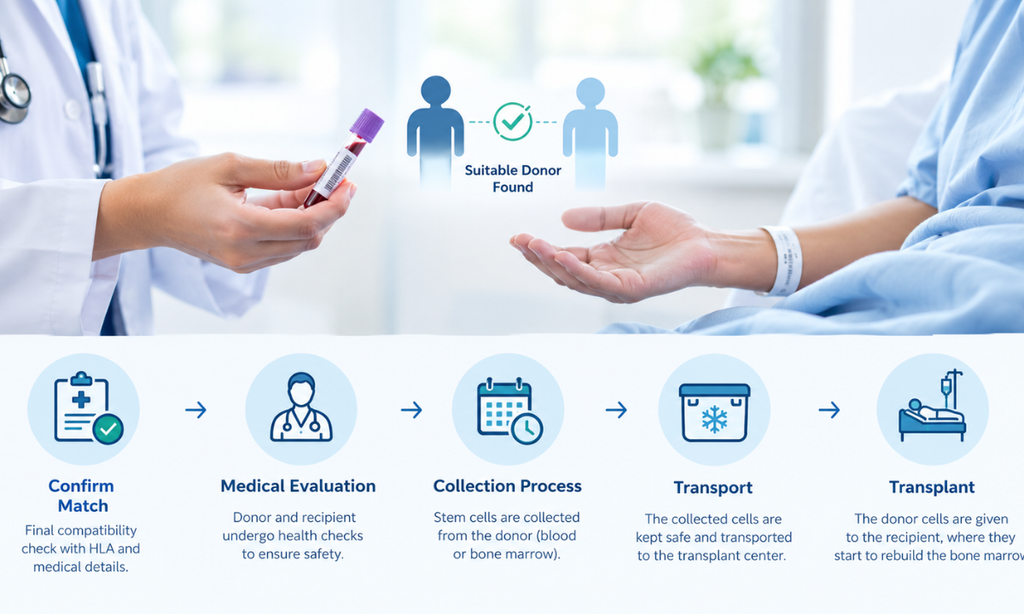
Donor health assessment
The donor has a full medical check, including blood tests, an examination and screening for infections. This makes sure donation is safe for the donor and the cells are safe for the patient.
Stem cell collection
There are two main ways to collect stem cells:
- Peripheral blood stem cell collection: This is the most common method. The donor has growth factor injections for four to five days to move stem cells into the bloodstream. The cells are then collected through a vein using a machine called an apheresis machine, in a process similar to donating platelets. It usually takes a few hours.
- Bone marrow harvest: Marrow is collected from the back of the pelvic bone with a needle under anaesthesia. The donor may feel sore for a few days.
The donor’s body replaces the donated stem cells naturally, usually within a few weeks.
Preparing the patient for transplantation
Meanwhile, the patient has a full evaluation and then conditioning treatment, chemotherapy with or without radiation, to prepare the marrow. The donor’s stem cells are then given through a drip, much like a blood transfusion.
Frequently Asked Questions
Can a parent be a bone marrow donor for their child?
Yes. A parent is almost always a half match for their child and can be considered as a haploidentical donor if they are healthy and suitable.
Can siblings have different HLA types?
Yes. Each sibling inherits a different mix of HLA markers from their parents, so siblings can be a full match, a half match or not a match at all.
Does the donor need the same blood group as the patient?
No. Blood group matching is not required. After the transplant, the patient’s blood group may change to the donor’s.
How long does HLA matching take?
Testing family members usually takes days to a few weeks. Searching for an unrelated donor can take longer, from several weeks to a few months.
Can an unrelated person donate bone marrow?
Yes. Volunteers who join a stem cell registry can be matched with patients they have never met.
Does finding a matching donor guarantee transplant success?
No. A good match lowers certain risks, but the outcome also depends on the disease, the patient’s health and the care after transplant.
Talk to a Specialist About Your Options
Donor matching is a key step in planning an allogeneic transplant, and every family’s situation is different. If you or a loved one has been diagnosed with a blood cancer or bone marrow disorder, the specialists at a cancer hospital in Bangalore can explain your treatment options and discuss whether a transplant may be appropriate for you. Knowing the early signs of blood cancer and when persistent fatigue and weakness needs testing can lead to an earlier diagnosis. If you are unsure where to go, this guide on how to choose the right oncology care hospital can help, and many families also want to understand cancer treatment cost in Bangalore before starting care.
Schedule a Consultation at Dasappa Cancer Hospital
If you, a patient, or a family member is experiencing symptoms, contact our clinical oncology team in Bengaluru for an expert evaluation:
Hospital Location: Dasappa Memorial Institute of Oncology (Dasappa Cancer Hospital), No. 132, Gandhi Bazaar Main Road, Basavanagudi, Bengaluru, Karnataka 560078
Consultation Helpline: +91 80 2667 9294 / +91 98450 12345
Website: dasappacancerhospital.com
Services Available: Medical Oncology, Surgical Oncology, Day-Care Chemotherapy, Bone Marrow Diagnostics, Second Opinion Consultations.