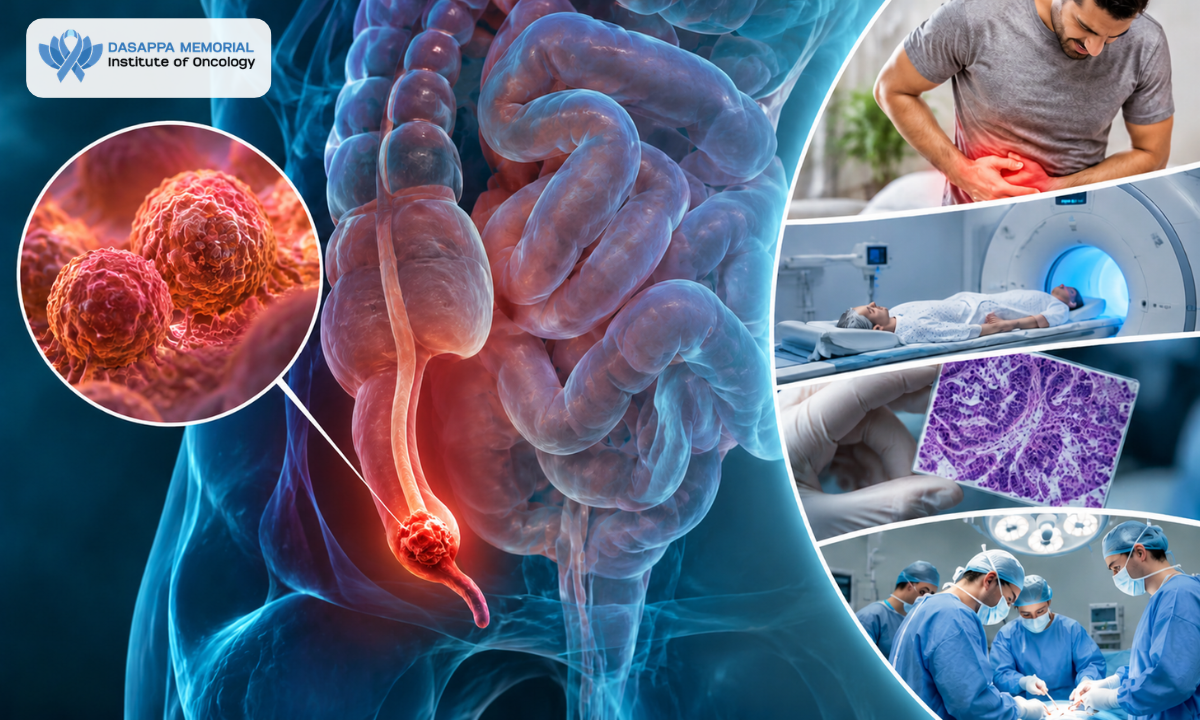
Appendix cancer, also called appendiceal cancer, is rare. It often causes no clear symptoms in its early stages, and it is sometimes found unexpectedly after an appendectomy or during tests for another abdominal problem. Because it is uncommon and can look like more familiar conditions, it may be recognised late.
The appendix is a small, finger-shaped pouch attached to the large intestine. Tumours can start in different cell types inside it, and they do not all behave alike. That is why the tumour type, grade and stage matter so much, and why treatment has to be planned for the individual. This guide explains the types, symptoms, diagnosis, staging and treatment options, and the questions worth asking your doctor.
What Is Appendix Cancer?
Appendix cancer is a growth of abnormal cells that starts in the appendix. It is different from appendicitis, which is inflammation or infection of the appendix, although the two can occur together or look similar at first.
Not every appendix tumour is cancerous. Some are benign, some behave in between and some are clearly malignant. Doctors use the terms appendiceal cancer, appendix tumour and appendiceal neoplasm for this group of conditions, and only a pathologist can say which one applies after examining the tissue.
What Types of Appendix Cancer Are There?
The type of tumour is one of the strongest influences on the treatment plan.
Appendiceal Adenocarcinoma
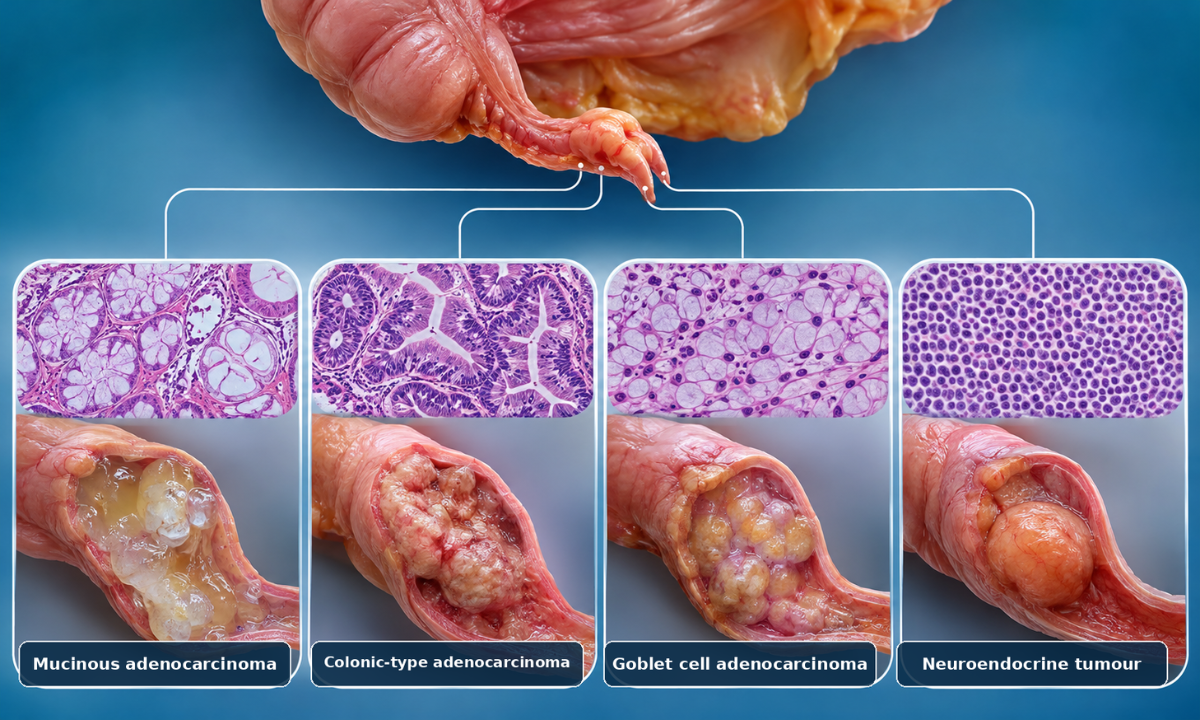
This begins in the glandular cells lining the appendix and is the broad category most often described. Several subtypes exist:
- Mucinous adenocarcinoma: produces mucin, a jelly-like substance, and may spread within the abdominal cavity.
- Colonic-type adenocarcinoma: resembles cancer of the large intestine.
- Signet-ring cell adenocarcinoma: a less common type with distinctive cell features.
- Goblet cell adenocarcinoma: a distinct carcinoma with mixed glandular and neuroendocrine features, treated as a cancer in its own right.
Appendiceal Neuroendocrine Tumour
This starts in neuroendocrine cells, which release hormones. These tumours are often slower growing, and size, grade and location influence what is needed. A small, low-grade tumour may be managed differently from an adenocarcinoma, which is why an accurate pathology report is so important.
What Are the Symptoms of Appendix Cancer?

Many people have no obvious symptoms, and the tumour is found incidentally. When symptoms do appear, they can include:
- Abdominal pain, often in the lower right side
- Bloating or abdominal swelling
- Changes in bowel habits
- Nausea or vomiting
- Feeling full early when eating
- Fluid build-up in the abdomen (ascites)
- An increasing waist size
These signs are not specific to cancer and are far more often caused by other conditions. They deserve evaluation when they are persistent, unexplained or getting worse.
Can Appendix Cancer Feel Like Appendicitis?
Yes. A tumour can block the opening of the appendix and trigger inflammation, so the first presentation may look like appendicitis. In some patients, the tumour is only identified when the removed appendix is examined under the microscope. Unusual findings during surgery or on imaging should always be followed up.
What Causes Appendix Cancer?
The exact cause is often unknown. Cancer develops when changes (mutations) in a cell’s genetic material make it grow uncontrollably. Some of these changes are acquired during life, and a smaller number may be inherited. Because the disease is rare, researchers have identified fewer clear causes than for common cancers, and lifestyle factors should not be presented as proven causes of appendix cancer.
Who Is at Higher Risk?
Risk factors are less clearly established than for many other cancers. Those that may be relevant include:
- Age: most diagnoses occur in adults, though it can occur at other ages.
- Family history: a family history of certain gastrointestinal cancers may be relevant.
- Inherited genetic conditions: some hereditary syndromes raise the risk of digestive tract cancers.
- Relevant medical history: your doctor may ask about previous bowel or abdominal conditions.
Having a risk factor does not mean you will develop the disease, and many patients have none. For a broader discussion, see our article on what causes cancer.
How Is Appendix Cancer Diagnosed?
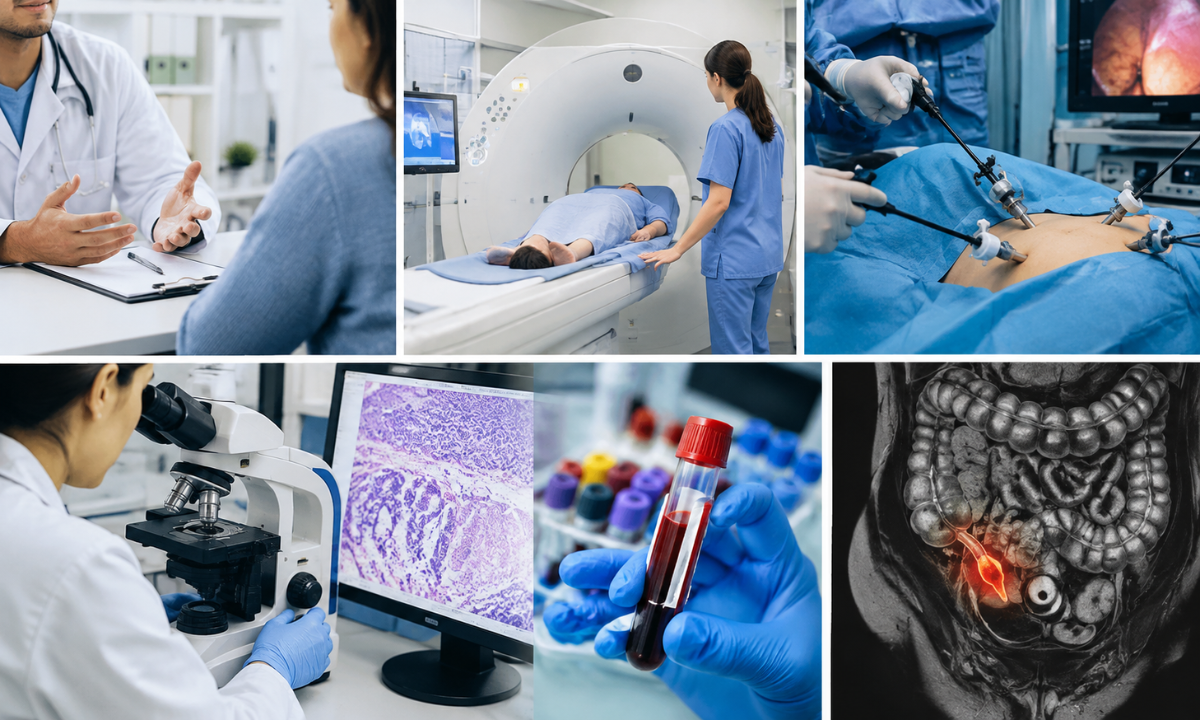
Diagnosis usually combines several steps.
Medical History and Physical Examination
Your doctor will ask about symptoms, previous surgery and family history, and examine your abdomen.
CT Scan and MRI
Imaging can show abnormalities in the appendix, abdominal masses, fluid, signs of peritoneal involvement and possible spread to other organs.
Laparoscopy
In selected cases, a surgeon uses a small camera inserted through a tiny incision to look directly inside the abdominal cavity and take samples.
Biopsy and Pathology
When appropriate, examining tissue under the microscope confirms whether a tumour is present, identifies its type and grade and shows whether it has spread locally. Pathology is what ultimately guides treatment. A biopsy before surgery is not always possible or needed, and sometimes the first definitive diagnosis comes from examining an appendix removed during an appendectomy.
Blood Tests and Tumour Markers
Blood tests may contribute to the overall picture, and tumour markers are used in some cases depending on the tumour type and clinical context. They are not routine for every patient and cannot diagnose appendix cancer on their own.
What Are the Stages of Appendix Cancer?
Staging describes how far the cancer has spread. For a general explanation, see our guide to understanding cancer stages. In appendix cancer, doctors look at:
- How deeply the tumour has grown into the appendix wall
- Whether nearby lymph nodes are involved
- Whether the cancer has spread to distant organs
- Whether it has spread within the peritoneum, the lining of the abdominal cavity
Staging systems differ according to tumour type, so your doctor will explain which applies to you.
Tumour type, tumour grade and cancer stage are three different things. The type is the kind of cell the cancer started in, the grade describes how abnormal the cells look and how quickly they may grow, and the stage describes how far the disease has spread. All three shape the plan.
What Is Pseudomyxoma Peritonei and How Is It Related to Appendix Cancer?
Pseudomyxoma peritonei (PMP) is a condition in which mucin-producing cells spread through the abdominal cavity and produce large amounts of jelly-like mucin. It most often originates from a mucin-producing tumour of the appendix. Mucin build-up can cause abdominal swelling, bloating and discomfort over time.
Because the disease lies within the peritoneum rather than in a single mass, it changes how treatment is planned. These patients often need specialist assessment, and the approach differs from that of a tumour confined to the appendix.
What Are the Treatment Options for Appendix Cancer?
Treatment depends on the tumour type, size, grade, stage, spread and the patient’s overall health. A multidisciplinary team usually plans the pathway, which may include surgery, chemotherapy given into the abdomen or through the bloodstream, and in selected cases targeted therapy.
Surgery for Appendix Cancer
Surgery is the main treatment for most appendix tumours. The type of operation depends on the findings:
- Appendectomy: removal of the appendix alone may be enough for selected small, localised tumours.
- Right hemicolectomy: removal of part of the colon along with nearby lymph nodes may be advised for some tumours, to lower the chance of leaving cancer behind.
- Cytoreductive surgery: when cancer has spread through the peritoneal cavity, the surgeon removes visible tumour deposits from the abdomen.
No single operation suits every patient, and your surgeon will explain why a particular approach is recommended in your case.
What Is HIPEC and When Is It Used?
HIPEC stands for hyperthermic intraperitoneal chemotherapy. After cytoreductive surgery, heated chemotherapy is circulated inside the abdominal cavity for a short time to treat microscopic disease the surgeon cannot see. Delivering the drug directly where the cancer lies allows a high local concentration.
It is used only in carefully selected patients, typically those with peritoneal spread that can be removed surgically and who are fit enough for a major operation. It is not suitable for every person with appendix cancer, and the decision follows a detailed specialist assessment. HIPEC is available only at specialist centres, so ask your doctor whether it could be considered and where. To learn more, read our guide to HIPEC surgery.
Is Chemotherapy Used for Appendix Cancer?
Sometimes. Systemic chemotherapy, given through a vein to reach the whole body, may be considered for certain adenocarcinomas, for higher-risk disease or when the cancer has spread beyond the abdomen. It differs from HIPEC, which is delivered inside the abdominal cavity during surgery. Whether chemotherapy helps depends on the tumour type and stage, and the team will recommend it individually. See our chemotherapy treatment page for how it is delivered.
Can Targeted Therapy Be Used for Appendix Cancer?
In selected advanced cases, yes. Targeted drugs act on specific molecular features of a tumour, so molecular testing may be considered when the cancer is advanced or recurs. Not every patient has a target, and not every tumour needs this testing. To learn how test results shape treatment, read about tumour biomarkers and genetic mutations in treatment plans.
What Factors Determine the Best Treatment?
The plan is built step by step from:
- Tumour type
- Grade
- Size and extent
- Peritoneal involvement
- Lymph-node and distant spread
- Your overall health and preferences
- A multidisciplinary team recommendation
What Is the Prognosis for Appendix Cancer?
Outlook varies widely. It depends on the tumour type, grade, stage and size, how much the cancer has spread within the abdomen, whether the surgeon can remove all visible disease and how the cancer responds to treatment. Because appendix cancer is rare and so varied, general survival figures can mislead and cannot predict what will happen to an individual. Your oncologist can explain what the findings mean for you.
What Happens After Treatment?
Follow-up usually includes regular check-ups, imaging and sometimes blood tests to watch for recurrence. Your team will also help with the effects of treatment, nutrition and supportive care. Contact your oncology team if you notice new or worsening abdominal pain or swelling, changes in bowel habits, unexplained weight loss or other symptoms that concern you.
When Should You See a Cancer Specialist?
Consider a specialist opinion if you have:
- Persistent, unexplained abdominal symptoms
- An unexpected tumour found after an appendectomy
- Abnormal findings on imaging
- A pathology report showing an appendiceal tumour
- Suspected spread within the abdomen
Rare cancers benefit from experienced, coordinated care. At Dasappa, patients are evaluated by a multidisciplinary team through tumour boards so that treatment is planned around the individual. You can learn more about our approach to cancer care.
Questions to Ask Your Doctor About Appendix Cancer
- What type of appendix cancer do I have?
- What is the tumour grade, and what stage is it?
- Has it spread to the peritoneum or lymph nodes?
- Do I need more surgery, and is cytoreductive surgery appropriate?
- Could HIPEC be considered?
- Do I need chemotherapy?
- Is molecular testing recommended?
- What follow-up will I need?
Frequently Asked Questions About Appendix Cancer
Is appendix cancer the same as appendicitis?
No. Appendicitis is inflammation or infection of the appendix. Appendix cancer is a tumour, though a tumour can sometimes cause appendicitis.
Is appendix cancer rare?
Yes. It is uncommon compared with most other digestive tract cancers.
What are the first symptoms of appendix cancer?
Many people have none. When present, early symptoms include abdominal pain, bloating and changes in bowel habits.
Can appendix cancer be found after an appendectomy?
Yes. Sometimes a tumour is identified only when the removed appendix is examined under the microscope.
What is the most common type of appendix cancer?
It depends on the population and classification used. Adenocarcinoma is the broad category most often described, and neuroendocrine tumours are another major group of appendiceal tumours.
What is pseudomyxoma peritonei?
A condition in which mucin-producing cells, most often from an appendix tumour, spread within the abdomen and produce jelly-like mucin.
Is HIPEC used for appendix cancer?
It may be used with cytoreductive surgery in carefully selected patients with peritoneal spread, but it is not suitable for everyone.
Can appendix cancer be cured?
Some patients, particularly those with localised tumours that are completely removed, may be cured. Outcomes depend on the tumour type, grade, stage and how much disease can be removed.
Does appendix cancer spread to the peritoneum?
It can, especially mucin-producing types, which is why imaging and specialist assessment of the abdominal cavity are important.
What treatment is used for advanced appendix cancer?
Options may include cytoreductive surgery with HIPEC, systemic chemotherapy and, in selected cases, targeted therapy, planned by a multidisciplinary team.