Medical Disclaimer
This article is for general information and awareness. It is not a substitute for professional medical advice, diagnosis or treatment. If you or a family member has been diagnosed with cancer, your oncology team will explain the exact stage and what it means for your treatment plan.
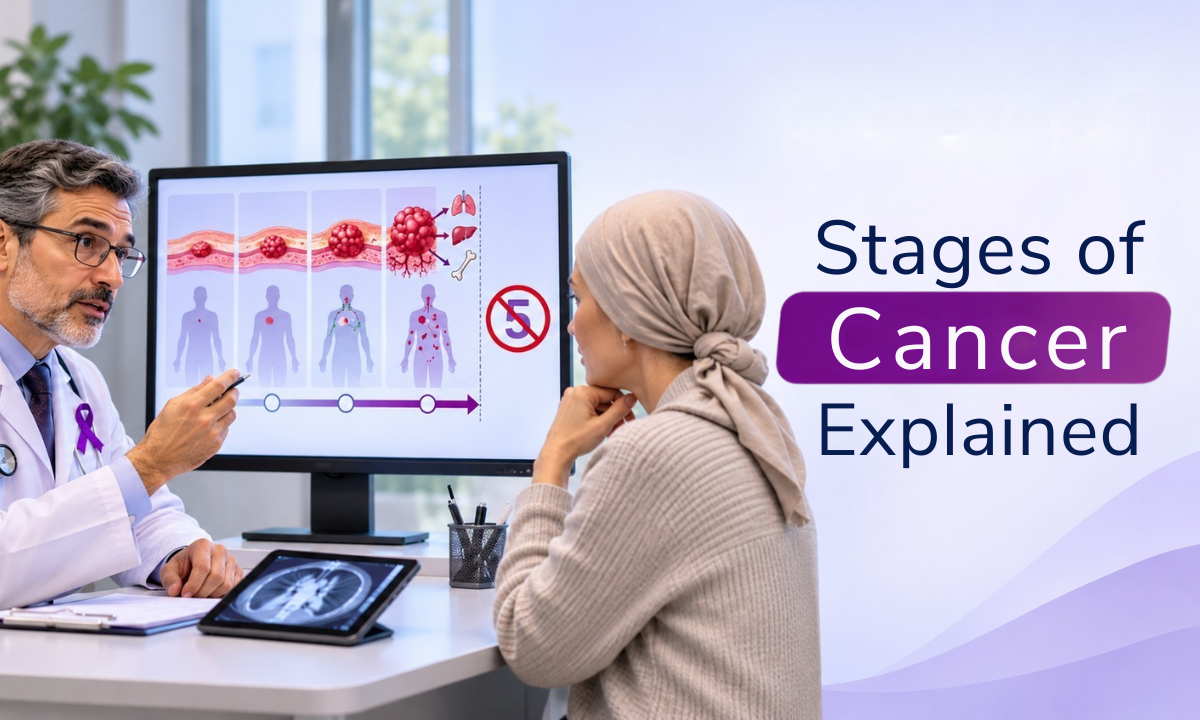
- Most solid cancers are staged from Stage 0 to Stage 4. Stages 1 to 4 are the four main invasive stages, while Stage 0 describes the earliest non-invasive form, called carcinoma in situ.
- There is no Stage 5 cancer. Stage 4 is the most advanced stage. If you have seen “stage 5” online, it is a misunderstanding, not a medical category.
- The stage describes how large the cancer is and how far it has spread, not how aggressive it will be.
- Staging guides treatment and gives doctors a shared way to compare outcomes.
Is There a Stage 5 Cancer?
No. There is no Stage 5 cancer. Standard cancer staging ends at Stage 4, which is the most advanced stage and usually means the cancer has spread to distant parts of the body. The internationally used TNM (Tumour, Node, Metastasis) staging system, maintained by the American Joint Committee on Cancer (AJCC) and the Union for International Cancer Control (UICC), ends at Stage 4. “Stages 5 of cancer” is a search term many people use, but it is not a real clinical stage.
Why does the confusion exist?
- Stage 4 cancer is also called metastatic or advanced cancer, and some people assume there must be a worse stage beyond it.
- Some cancer types use substages such as Stage 4A, Stage 4B or Stage 4C, which can look like a higher stage.
- Blood cancers such as leukaemia and lymphoma are staged using different systems, which can add to the confusion.
If someone has been told their cancer is Stage 4, the right next step is to understand the specific sub-category, the treatment plan, and the goals of care, not to assume there is a higher stage.
What Are the Four Stages of Cancer?
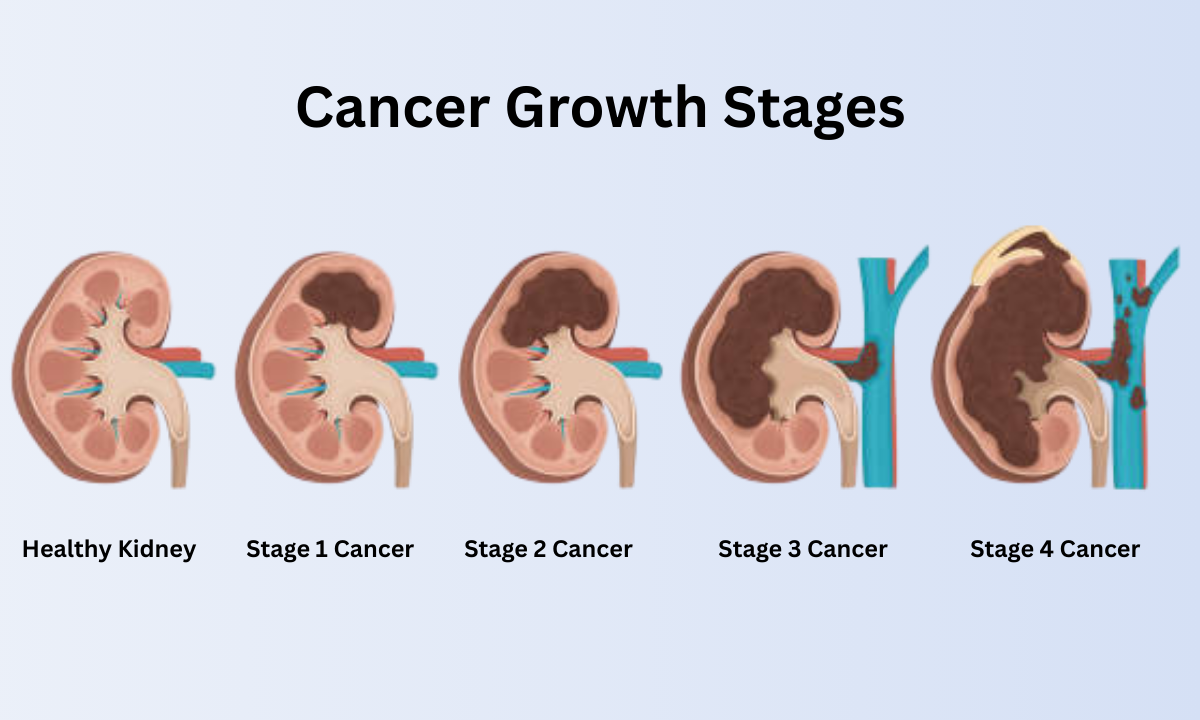
Most solid cancers (such as breast, lung, colon, stomach, kidney, prostate and head and neck cancers) are grouped into four main stages, with Stage 0 added for the very earliest, non-invasive form.
| Stage | What it means |
|---|---|
| Stage 0 | Abnormal cells are present but have not grown into surrounding tissue. Also called carcinoma in situ. |
| Stage 1 | Cancer is small and limited to the organ where it started. |
| Stage 2 | The cancer is larger or has grown more deeply, and may involve nearby lymph nodes depending on the cancer type. |
| Stage 3 | The cancer is larger, has grown into nearby tissues, or has spread to nearby lymph nodes. The exact criteria depend on the cancer type. |
| Stage 4 | The cancer has spread beyond the original site, often to distant organs or distant lymph nodes. In many cancers, this is called metastatic or advanced cancer. |
The exact criteria for each stage vary by cancer type. Your oncology team uses the stage along with other factors (grade, genetic markers, overall health) to decide on treatment.
Stage vs Grade vs Prognosis
Stage is not the only word your oncology team will use. Each term describes something different.
| Term | What it describes |
|---|---|
| Stage | How large the cancer is and how far it has spread |
| Grade | How abnormal the cancer cells look under a microscope |
| Molecular profile | Genetic or protein features that may guide targeted treatment |
| Prognosis | The likely course of disease, based on multiple factors |
Two people with the same stage can have very different outlooks because of these other factors.
Stage 0 Cancer: The Earliest Form
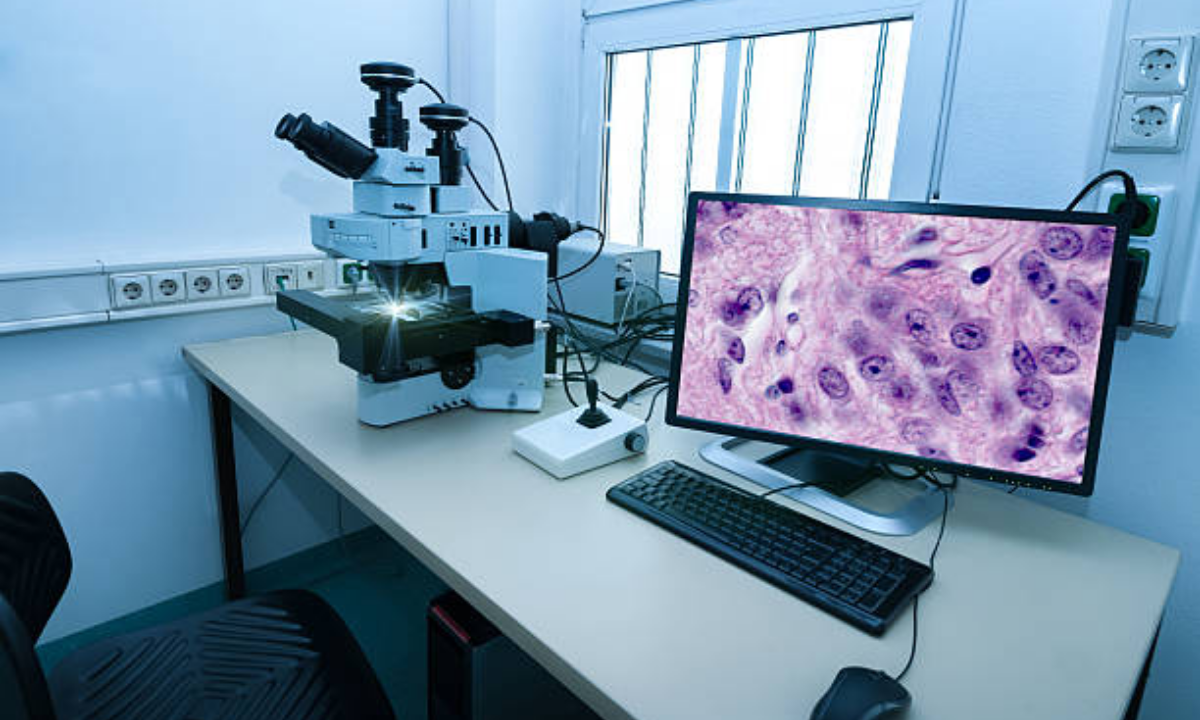
Stage 0 is sometimes called carcinoma in situ, meaning “cancer in place”. Abnormal cells have formed, but they have not invaded surrounding tissue.
- Example: Ductal carcinoma in situ (DCIS) in the breast.
- Treatment: Often surgery alone, sometimes with radiation. Some Stage 0 lesions are closely monitored.
- Outlook: Very good when treated promptly.
Regular screening (mammograms, Pap smears, colonoscopies) often detects cancer at this stage.
Stage 1 Cancer: Small and Localised
- Cancer has formed but is small and limited to one area.
- Nearby lymph nodes are not involved.
- Example: A small lung tumour that has not spread outside the lung tissue.
- Treatment: Often surgery or radiation alone, sometimes with short courses of chemotherapy or targeted therapy.
- Outlook: Generally very good for most cancer types.
Stage 2 Cancer: Larger but Still Local
- The tumour is larger than Stage 1 or has grown more deeply into the organ.
- Nearby lymph nodes may or may not be involved, depending on the cancer type.
- Example: A stomach cancer that has grown into the stomach wall.
- Symptoms may begin to appear, such as pain, swelling, bleeding, altered bowel habits or fatigue, though many people still feel well.
- Treatment: Usually a combination of surgery with chemotherapy, radiation or targeted therapy.
Stage 3 Cancer: Locally Advanced
- Larger tumour, often with spread to nearby lymph nodes or nearby structures.
- Example: Breast cancer that has spread to lymph nodes in the armpit.
- Symptoms: More noticeable swelling, lumps, weight loss, pain or site-specific signs (coughing, bleeding, swallowing difficulty).
- Treatment: Usually a combination of surgery, chemotherapy, radiation therapy and, where appropriate, targeted therapy or immunotherapy.
Stage 3 is more challenging than Stage 1 or 2, but modern treatment can still achieve long-term control or cure in many cancer types.
Stage 4 Cancer: Metastatic Cancer
Stage 4 is the most advanced stage. Cancer has spread (metastasised) to distant organs such as the liver, lungs, bones or brain.
- Example: Colon cancer that has spread to the liver.
- Treatment options include:
- Chemotherapy
- Targeted therapy
- Immunotherapy
- Hormone therapy, used for hormone-sensitive cancers such as some breast and prostate cancers
- Surgery may sometimes be used to remove a limited area of disease, manage a complication, or treat an oligometastatic cancer in carefully selected patients
- Radiation therapy
- Palliative care, which can be provided alongside active cancer treatment, not only at the end of life
- Outlook: Varies widely by cancer type. For some cancer types, Stage 4 disease can be managed as a long-term condition with ongoing treatment and monitoring.
Stage 4 does not automatically mean no treatment. Depending on the cancer type, molecular features, sites of spread and overall health, treatment may aim to control the disease, relieve symptoms, extend life or preserve quality of life.
Does Stage 4 Mean Terminal?
No. Stage 4 means the cancer has spread, but it does not automatically mean that treatment has stopped or that death is imminent. Some Stage 4 cancers can be controlled for years, while others have a more limited outlook. The prognosis depends on the cancer type, molecular features, sites of spread, overall health and response to treatment.
What if My Report Says Stage 4A, 4B or 4C?
Some cancers use substages such as Stage 4A, 4B or 4C. These describe more detailed categories within Stage 4, not a progression to Stage 5. Ask your oncologist what the letter means for your specific cancer and treatment plan.
Blood Cancers Are Staged Differently
Leukaemias, lymphomas and myeloma are not usually staged using the same TNM system as solid tumours. Doctors may use systems such as Ann Arbor staging for lymphoma, Rai and Binet staging for chronic lymphocytic leukaemia, or disease-specific scoring systems for myeloma. If your diagnosis is a blood cancer, ask your haematologist which system they are using.
Why “Stage 5” Appears in Searches
People search for “stage 5 cancer” or “stages 5 of cancer” for a few reasons:
- They have heard someone describe cancer as “stage 4 or worse” and assume a Stage 5 exists.
- They have seen Stage 4A, 4B or 4C mentioned in reports and misread them as Stage 5.
- They are looking for information about end-of-life care or palliative care and reach for a stage number.
If you have been told a loved one has advanced cancer, the useful questions are not about a stage number but about the specific sub-category, the treatment plan, the goals of care, and the support available for the patient and family. Your oncology team can answer these in detail.
How Doctors Decide the Stage
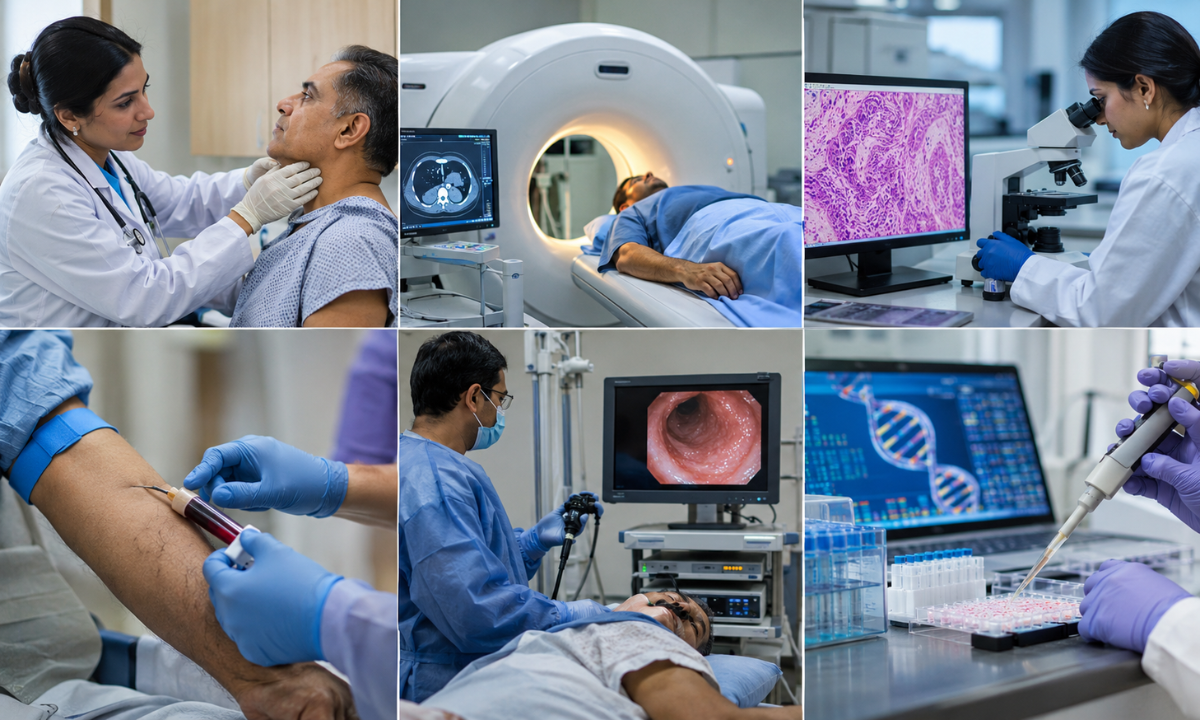
The process is called cancer staging. Doctors combine several tests:
- Clinical examination: Checking for lumps, swelling, and signs of spread.
- Imaging: CT, MRI, ultrasound, PET-CT, bone scans, or X-rays to see where cancer is in the body.
- Biopsy: A small tissue sample examined under a microscope to confirm the diagnosis and type.
- Blood tests: General health markers and specific cancer markers.
- Endoscopy or other targeted tests depending on the cancer site.
- Molecular and genetic testing: For some cancers, this helps match treatment to the biology of the tumour.
The final stage is usually a combination of the clinical stage (before surgery) and the pathological stage (after surgery, from the removed tissue).
The TNM System in Simple Terms
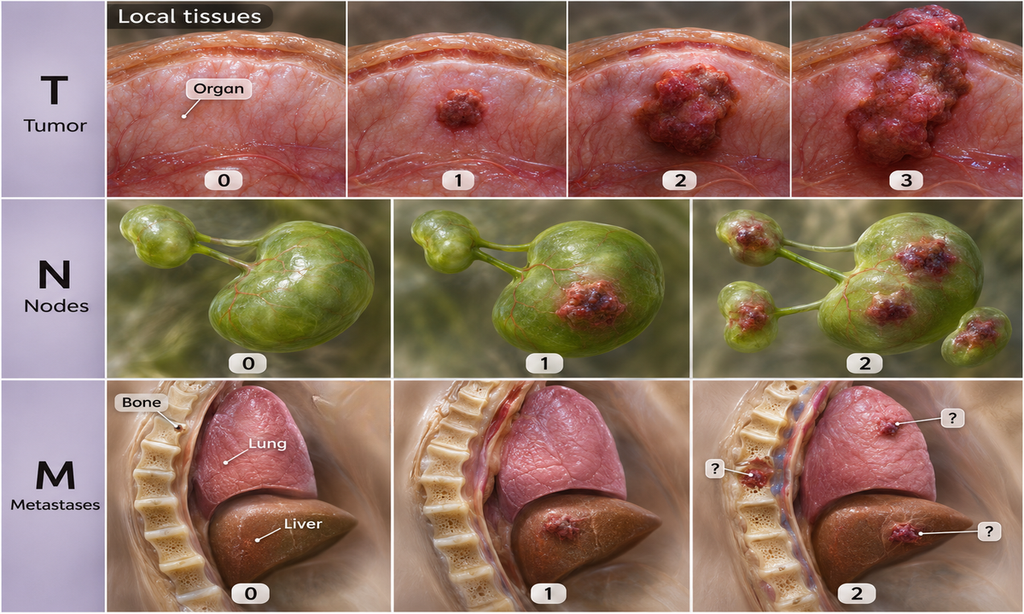
Behind the Stage 0 to Stage 4 labels is the TNM system:
- T (Tumour): How big is the primary tumour and how deeply has it grown?
- N (Nodes): Have any nearby lymph nodes been affected? How many?
- M (Metastasis): Has the cancer spread to distant parts of the body?
Each letter is given a number (for example, T2, N1, M0), and the combination maps on to Stages 0 to 4.
Common Symptoms by Stage
Cancer symptoms vary by type and site, but there are broad patterns.
| Stage | Common patterns |
|---|---|
| Stage 0 | Usually none; detected on screening |
| Stage 1 | Often no symptoms, or mild, non-specific signs (small lump, mild change in bowel or urinary habits) |
| Stage 2 | Local symptoms become more noticeable: lumps, bleeding, cough, voice change, swallowing difficulty, pain in the affected area |
| Stage 3 | Larger lumps or swelling, enlarged lymph nodes, weight loss, persistent pain, fatigue |
| Stage 4 | Symptoms from distant spread: bone pain, breathlessness, headaches, jaundice, severe weight loss |
These are examples, not rules. Many cancers in early stages cause no symptoms at all, which is why screening is so important.
Does the Stage Decide Survival?
Stage is one of the most important predictors of outcome, but it is not the only one. Survival also depends on:
- The type of cancer
- The grade (how aggressive the cells look under the microscope)
- Molecular and genetic features of the tumour
- The person’s age and overall health
- How well the cancer responds to the first treatment
- Access to timely, appropriate care
Two people with “Stage 3 cancer” of different types can have very different outlooks. Ask your oncology team about outcomes for your specific cancer, not for stage in general.
When to Seek Urgent Care
Contact your oncology team urgently if you develop:
- Severe breathlessness
- New weakness or numbness
- Seizures
- Severe bone pain
- Confusion
- Uncontrolled vomiting
- Signs of infection such as fever, especially during chemotherapy
Tips for Patients and Families
- Do not panic at the stage number. The stage guides treatment; it does not define the person.
- Ask what the stage means for your type of cancer, not for cancer in general.
- Request a written summary of the diagnosis, stage, molecular tests, and plan.
- Seek a second opinion for complex or advanced cases.
- Involve one or two close family members in important consultations.
- Ask about supportive care early, including nutrition, pain, mental health and dental care.
Questions to Ask Your Oncologist
- What is my exact stage, and what substage (if any) do I have?
- What does this stage mean for my type of cancer?
- Which tests confirmed the stage?
- What are my treatment options, and what is the goal of treatment?
- What are the expected side effects and how will they be managed?
- Would a second opinion be useful?
- What support is available for me and my family?
Comprehensive Cancer Care at Dasappa Cancer Hospital
At Dasappa Cancer Hospital in Basavanagudi, Bangalore, led by Dr Pandu Dasappa, we provide complete cancer care from early diagnosis and screening through surgical oncology, chemotherapy, radiation therapy, targeted therapy, immunotherapy, supportive care, pain and palliative care and psychosocial support. To speak to our team, book an appointment or call +91 88841 66664.
Conclusion
Most cancers are grouped into four main stages (Stages 1 to 4), with Stage 0 covering the very earliest, non-invasive form. There is no Stage 5 cancer; Stage 4 is the most advanced stage, and it is where many of the most important modern treatment advances have been made. If a diagnosis has brought you to this page, the single most useful next step is a clear conversation with your oncology team about your exact stage, your treatment options and the goals of your care.
Frequently Asked Questions
How many stages of cancer are there?
Most solid cancers are grouped into four main stages, numbered 1 to 4, with Stage 0 added for the very earliest, non-invasive form. So in total you will hear about five stage labels (0, 1, 2, 3 and 4), with four “invasive” stages.
Is there a stage 5 cancer?
No. There is no Stage 5 cancer. The standard staging system ends at Stage 4, which is the most advanced stage and refers to cancer that has spread to distant parts of the body. Some cancers use substages such as Stage 4A, 4B or 4C.
What is the difference between stage 4 and stage 5 cancer?
There is no stage 5. Stage 4 is the most advanced stage. If someone refers to “stage 5”, they may mean advanced cancer, but this is not a formal medical stage.
Is stage 0 cancer really cancer?
Stage 0 is sometimes called pre-invasive cancer or carcinoma in situ. Abnormal cells are present, but they have not grown into surrounding tissue. Treatment at this stage is often very successful.
What are the four stages of cancer in simple terms?
Stage 1 is small, localised cancer. Stage 2 is a larger tumour, still local, which may involve nearby lymph nodes in some cancers. Stage 3 is larger again or has spread to nearby lymph nodes or tissues. Stage 4 has spread to distant parts of the body. The exact criteria vary by cancer type.
Does the stage decide how long someone will live?
The stage is important, but it is not the only factor. The cancer type, grade, molecular features, overall health, and response to treatment all matter. Two people with the same stage can have very different outcomes.
Can stage 4 cancer be treated?
Yes. Treatment at Stage 4 depends on the cancer type and where it has spread. For some cancer types, modern therapies can control disease, relieve symptoms and extend life. Options include chemotherapy, targeted therapy, immunotherapy, hormone therapy, selected surgery, radiation and palliative care.
How do doctors decide the stage?
Through a combination of physical examination, imaging (CT, MRI, PET, ultrasound), biopsy, blood tests, and in some cases molecular or genetic testing. The final stage usually combines the clinical stage before surgery and the pathological stage after surgery.
Sources
- National Cancer Institute. Cancer Staging.
- American Joint Committee on Cancer. AJCC Cancer Staging System.
- Union for International Cancer Control. TNM Classification of Malignant Tumours.
- Cancer Research UK. Stages of cancer.
- American Cancer Society. Cancer Staging.