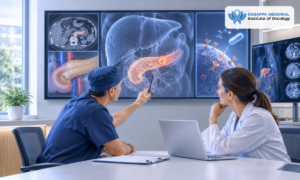

When dealing with daily digestive discomfort, it is incredibly common to brush off the issue as something minor, perhaps a bad meal, daily stress, or a temporary stomach bug.
However, ignoring persistent changes in your body can be a dangerous gamble. Recognizing colon cancer symptoms at the early stage is absolutely critical, as this condition is highly treatable when caught before it spreads. If you are experiencing unexplained and ongoing digestive distress, seeking expert Gastrointestinal Cancer Treatment in Bangalore should be your immediate priority rather than waiting for the discomfort to pass.
Digestive health is, unfortunately, often treated as a taboo topic. Many individuals feel embarrassed or uncomfortable discussing changes in their bowel habits or bathroom routines, even with their own doctors.
This silence is the exact environment where a minor, highly treatable internal issue can quietly develop into a complex malignancy. Your gastrointestinal tract is a massive, highly intelligent network that actively sends out warning signals when its structural integrity is compromised by a developing polyp or tumor.
The key to protecting your long-term health is learning how to listen to those subtle signals without fear or denial. By moving past the embarrassment and understanding exactly what to look for, you give yourself the ultimate advantage: the gift of time.
Let us look closely at the vital warning signs your body uses to ask for help, so you can take prompt, life-saving diagnostic action.
Medical Disclaimer
The information provided in this article is strictly for educational and informational purposes and does not substitute for professional medical advice, formal diagnosis, or clinical treatment. The symptoms listed above can be caused by various non-cancerous conditions. Always consult directly with a qualified oncologist or gastroenterologist regarding your specific physical symptoms, medical history, and diagnostic needs. Never ignore professional medical advice or delay seeking care based on the contents of this guide.
Why Do We Ignore the Warning Signs?
One of the greatest hurdles in oncology is the timing of a patient’s first medical visit. A primary reason why colorectal issues are frequently diagnosed in later, more complex stages is not a lack of diagnostic technology; it is the psychology of delay.
The early stages of a malignant growth in the large intestine rarely cause severe, unbearable physical agony. Instead, it manifests as minor, intermittent discomforts that seamlessly blend into the background of everyday life.
Because we live in a fast-paced environment where minor indigestion, bloating, and fluctuating stomach cycles are considered “normal” side effects of a busy lifestyle or a poor diet, we tend to normalize these changes. When a subtle shift occurs, our immediate instinct is to look for a comforting, non-threatening explanation.
Understanding how to detect colon cancer early requires breaking down this dangerous cycle of self-diagnosis and recognizing the common medical traps that cause patients to delay life-saving evaluations:
The Common Diagnostic “Masks”
1. The Hemorrhoids (Piles) Trap: This is perhaps the most frequent cause of delayed diagnosis.
Many adults experience occasional hemorrhoids or fissures and automatically assume that any trace of blood in the toilet bowl or on tissue paper is simply an old flare-up. Malignancies can quietly bleed in the same manner, hiding behind a self-diagnosed case of piles.
2. The Irritable Bowel Syndrome (IBS) Umbrella: Individuals who have spent years managing a sensitive stomach or an official IBS diagnosis are highly prone to ignoring early warning signs.
They often attribute a sudden, severe shift in their regular bowel patterns to a simple dietary trigger, stress, or an IBS flare-up, missing the structural change happening inside the colon wall.
3. The Dietary Justification: When bloating or mild abdominal cramping occurs, it is incredibly easy to blame a heavy dinner, an extra cup of coffee, or a lack of dietary fiber.
While these are common causes of temporary distress, real lifestyle-induced issues resolve within a few days; structural growth will continue to trigger symptoms week after week.
The Lifecycle of Delay

Understanding that early-stage symptoms are intentionally subtle, you can shift your approach from passive waiting to proactive awareness.
If a minor digestive issue refuses to go away after two to three weeks despite changing your diet or taking basic over-the-counter remedies, your body is telling you that the root cause is not standard indigestion. It is a sign that it is time to step out of the cycle of justification and seek a definitive, professional medical evaluation.
The Top 10 Early Warning Signs: Localized Digestive Shifts
When a tumor or a large precancerous polyp develops along the inner lining of the large intestine, it physically alters how your digestive tract processes and eliminates waste.
These localized, structural shifts represent the classic colorectal cancer symptoms that originate directly within the gastrointestinal tract. Because your bowel movements follow a highly coordinated biological routine, even minor physical obstructions along the colon wall will ripple through your daily digestion.
Pay close attention to these first five localized warning signs, which focus heavily on physical changes in your stool and bathroom habits:
1. Persistent Alterations in Bowel Dynamics
It is entirely normal for your bowel movements to fluctuate occasionally based on what you eat or your hydration levels.
However, a warning sign occurs when you experience a sudden, unexplained shift, such as continuous diarrhea, progressive constipation, or an unusual cycle alternating between the two that lasts for more than two to three weeks. This happens because a growing mass can alter the muscular contractions of the colon wall, disrupting its natural rhythm.
2. Changes in Stool Caliber (Ribbon-Like Stools)
The width and shape of your stool can provide crucial clues about your internal anatomy. As a tumor grows larger on the left side of the colon (the descending colon), it physically narrows the space through which waste must pass.
If you notice that your stool has suddenly become consistently thin, pencil-like, or ribbon-like, it indicates a structural narrowing inside the intestinal lumen that requires immediate medical investigation.
3. Rectal Bleeding or Hidden Blood in the Stool
Discovering blood during a bathroom routine is always a sign that demands attention. The appearance of the blood often depends on where the growth is located:
- Bright Red Blood: This typically suggests bleeding closer to the exit, in the rectum or lower colon, and is often mistakenly blamed on hemorrhoids.
- Dark, Tarry, or Black Stool: This indicates bleeding occurring much higher up in the colon. As the blood travels through the digestive tract, it undergoes partial digestion, turning the stool a dark, sticky, or maroon color that may look like coffee grounds.
4. The Sensation of Incomplete Evacuation (Tenesmus)
A highly distinct and frustrating early warning sign is tenesmus, the persistent feeling that you need to pass stool even when your bowels are empty.
This occurs because a tumor growing in the rectal area acts as a physical mass. Your body’s internal nerve receptors mistake the tumor for retained waste, constantly triggering the muscular urge to evacuate, leading to repeated, unproductive trips to the bathroom.
5. Chronic Abdominal Discomfort and Persistent Gas
While occasional gas and bloating are common parts of digestion, a structural blockage creates a very different pattern. When a tumor begins to partially obstruct the smooth passage of digesting food and natural gases, your intestinal muscles must contract much harder to push materials past the obstacle.
This leads to persistent, localized cramping, sharp abdominal pains, and a heavy, bloated feeling that refuses to resolve even after passing gas.
Systemic Clues
While the first five symptoms focus heavily on localized changes within your digestive tract, a growing tumor eventually impacts your entire physiological system. As a malignancy advances, it actively consumes your body’s nutritional reserves, alters your metabolic rate, and can even cause slow, microscopic blood loss that goes completely unnoticed in daily life.
These systemic clues represent bowel cancer symptoms that manifest outside the bathroom, reflecting the silent toll the disease takes on your broader health:
6. Chronic, Unexplained Fatigue and Exhaustion

This is not the standard tiredness that improves with a good weekend of rest. Systemic oncological fatigue is a profound, bone-deep depletion of energy that leaves you feeling exhausted even after minor daily activities.
This happens because your body is constantly redirecting its cellular energy and resources to fight the growing mass, leaving your healthy tissues starved of vital metabolic fuel.
7. Sudden, Unintentional Weight Loss

Losing weight without changing your diet, increasing your workouts, or actively trying is a major clinical warning sign across oncology.
When a tumor develops, it alters your body’s metabolism and secretes specific proteins that cause cachexia, a condition where the body prematurely breaks down muscle and fat. Additionally, an internal obstruction can subtly reduce your appetite, causing you to eat less without even realizing it.
8. Iron-Deficiency Anemia (Unexplained Drop in Hemoglobin)
A growing tumor along the colon wall has a fragile blood supply, meaning it frequently bleeds tiny, microscopic amounts into your stool. As this bleeding is slow and hidden, you may never see bright red blood in the toilet.
Over months, however, this continuous blood loss depletes your body’s iron stores, leading to anemia. If a routine blood test suddenly reveals a sharp drop in your hemoglobin or iron levels without an obvious cause, it warrants an immediate gastrointestinal evaluation.
9. Persistent Nausea, Vomiting, and Loss of Appetite
As a tumor increases in size, it acts like a physical dam inside a plumbing network. When waste and digested food struggle to pass through the narrowed colon, the digestive tract begins to back up. This internal backup triggers persistent bouts of unexplained nausea, early satiety (feeling full after just a few bites of food), and occasional vomiting as your stomach struggles to empty normally.
10. Dull, Unexplained Lower Back or Pelvic Pain
In the early stages, pain is usually localized to abdominal cramping. However, if a growth develops deep within the rectum or the lower sigmoid colon, it can begin to press against surrounding pelvic walls, nerve pathways, or the lower spine.
This triggers a constant, dull, aching pain in the lower back or pelvis that doesn’t change when you shift positions, rest, or use standard muscle-relief creams.
Moving from Suspicion to Action: The Diagnostic Process
Experiencing any of the symptoms listed above can understandably trigger a wave of anxiety. For many patients, the fear of the diagnostic procedure itself is what keeps them away from the clinic. However, modern gastrointestinal diagnostics have evolved significantly.
Today, screening procedures are highly advanced, heavily prioritized around patient comfort, and virtually painless.
Transitioning from suspicion to clinical certainty is the most empowering step you can take for your health. Here is exactly what you can expect when you consult an oncologist or gastroenterologist to investigate your symptoms:
1. The Initial Consultation and History
Your doctor will not rush you straight into a procedure. The process begins with a detailed conversation. Your specialist will review your specific symptoms, their duration, your family history of digestive cancers, and your overall lifestyle. They may also perform a brief, standard physical examination of your abdomen to check for localized tenderness or palpable masses.
2. Non-Invasive Stool Tests
If your symptoms are mild or you are at average risk, your doctor might begin with simple, non-invasive laboratory tests to check for microscopic clues:
- Fecal Immunochemical Test (FIT): This test specifically looks for hidden (occult) human blood in the lower intestines, which can be an early indicator of bleeding polyps.
- Stool DNA Test: This advanced test analyzes a stool sample to detect specific DNA mutations that colon tumors or large precancerous polyps shed into the digestive tract.
3. The Gold Standard: Colonoscopy
If you are experiencing persistent symptoms like ribbon-like stools, unexplained weight loss, or visible blood, a colonoscopy is the absolute best diagnostic tool available.
Despite its reputation, a modern colonoscopy is not a painful ordeal. Here is why it remains the gold standard:
- Complete Comfort: The procedure is performed under mild to moderate sedation. Most patients sleep right through it and wake up remembering nothing about the process.
- Direct Visualization: It allows the doctor to visually inspect the entire length of your large intestine using a flexible, lighted tube with a high-definition camera.
- Immediate Intervention: This is the only test that is both diagnostic and preventive. If the doctor spots a suspicious, precancerous polyp during the exam, they can safely remove it right then and there, permanently preventing it from ever turning into a malignancy.
4. Advanced Imaging (CT, MRI, or PET Scans)
If a mass is discovered during a colonoscopy, your medical team will utilize state-of-the-art 3D imaging to understand the exact size, location, and structural depth of the tumor. These highly detailed scans ensure that your surgical and oncological team can build a highly precise, personalized treatment plan before you ever step foot in an operating room.
Why Choose Dasappa Cancer Hospital?
A cancer diagnosis, or even the suspicion of one, is a life-altering moment. Navigating the next steps requires a medical team that combines elite clinical expertise with deep, unwavering compassion. When searching for the Best Cancer Treatment Hospital in Bangalore, patients and their families consistently place their trust in Dasappa Cancer Hospital for our patient-first philosophy and comprehensive, all-under-one-roof care model.
Under the expert leadership of Dr. Pandu Dasappa, a renowned Surgical Oncologist with over 27 years of dedicated clinical experience, our facility is built to handle the most complex oncological challenges with precision.
Here is why we are widely recognized as the Best Cancer Hospital in Bangalore:
- Complete Care Ecosystem: We are a 75+ bed super-specialty facility equipped with everything from in-house advanced diagnostic imaging and pathology labs to dedicated chemotherapy units and state-of-the-art modular operating theatres.
- Multidisciplinary Tumor Boards: Your case is never evaluated by just one doctor. Our dedicated team of surgical, medical, and radiation oncologists collaborate on every single case to design a highly personalized, targeted treatment plan.
- Advanced Surgical Precision: We specialize in cutting-edge, minimally invasive laparoscopic and robotic gastrointestinal surgeries, ensuring precise tumor removal with significantly faster patient recovery times.
We believe in treating the person, not just the disease. Our care extends beyond surgery and medication to include pain and palliative care, nutritional counseling, and dedicated psychosocial support to help families navigate the emotional journey of recovery.
Conclusion:
Your body is incredibly resilient, but it relies on you to listen when it signals that something is structurally wrong. Colon cancer does not happen overnight; it is a progressive disease that gives you a window of opportunity to intervene. By paying attention to these ten critical warning signs from subtle changes in your bathroom routine to unexplained fatigue, you take the power away from the disease and put it back into your own hands.
Do not let fear or embarrassment dictate your health timeline. Step forward, speak to a specialist, and embrace the life-saving clarity that comes with an early, accurate diagnosis.