
Receiving a leukemia diagnosis is a life-altering moment that immediately triggers an urgent search for the absolute best cure. However, when it comes to modern oncology, a universal, one-size-fits-all approach simply does not exist.
The most effective leukemia treatment is one that is meticulously customized to a patient’s specific genetic profile, age, and exact disease subtype. If you or a loved one is seeking comprehensive Blood Cancer Treatment in Bangalore, it is vital to understand that clinical success relies entirely on targeted precision rather than generalized, standard protocols.
For decades, the approach to hematological malignancies was relatively rigid, often relying heavily on aggressive, broad-spectrum therapies.
Today, the medical landscape has completely transformed. At Dasappa Cancer Hospital, our multidisciplinary team of hematologists and medical oncologists approaches each case as a unique biological puzzle. Moving away from outdated methods and embracing advanced molecular profiling, we design dynamic treatment pathways that maximize survival rates while actively preserving the patient’s daily quality of life.
To truly understand what the “best” medical option looks like for your specific diagnosis, we must first break down how oncologists classify the disease and explore the revolutionary clinical tools currently available to fight it.
Medical Disclaimer
The information provided in this article is strictly for educational and informational purposes and does not substitute for professional medical advice, formal hematological diagnosis, or specialized clinical treatment. Leukemia subtypes, genetic mutations, and required treatment protocols vary drastically from patient to patient. Always consult directly with a qualified hematologist or medical oncologist regarding your specific blood test results and treatment options. Never ignore professional medical warnings or delay seeking urgent clinical care based on the contents of this guide.
Decoding Leukemia: Why Specificity Matters
To understand what makes a particular therapeutic path successful, you must first understand that leukemia is not a single, uniform disease. It is a broad category of blood cancers that originate in the bone marrow, the soft inner factory where your body manufactures white blood cells, red blood cells, and platelets.
When a patient develops leukemia, this factory malfunctions, pumping out millions of abnormal, immature white blood cells (blasts) that crowd out healthy blood cells. How rapidly this crowding happens, and the specific type of white blood cell involved, determines the clinical classification of the disease.
Oncologists divide leukemia along two primary biological axes:
The Two Critical Biological Axes
- The Rate of Progression (Acute vs. Chronic): Acute Leukemias escalate rapidly. The bone marrow produces completely non-functional blasts that multiply at an alarming rate, demanding immediate, aggressive medical intervention.
- Chronic Leukemias develop much more slowly. The abnormal cells can still perform some of their daily functions, and the disease may remain silent or stable for years before requiring active intervention.
- The Cell Lineage Affected (Lymphocytic vs. Myeloid):
- Lymphocytic (or Lymphoblastic) Leukemias impact the lymphoid stem cells, which normally mature into white blood cells like T-cells and B-cells responsible for targeted immune memory.
- Myeloid (or Myelogenous) Leukemias target the myeloid stem cells, which are responsible for creating red blood cells, platelets, and other types of white blood cells (like granulocytes).
The Four Core Leukemia Subtypes
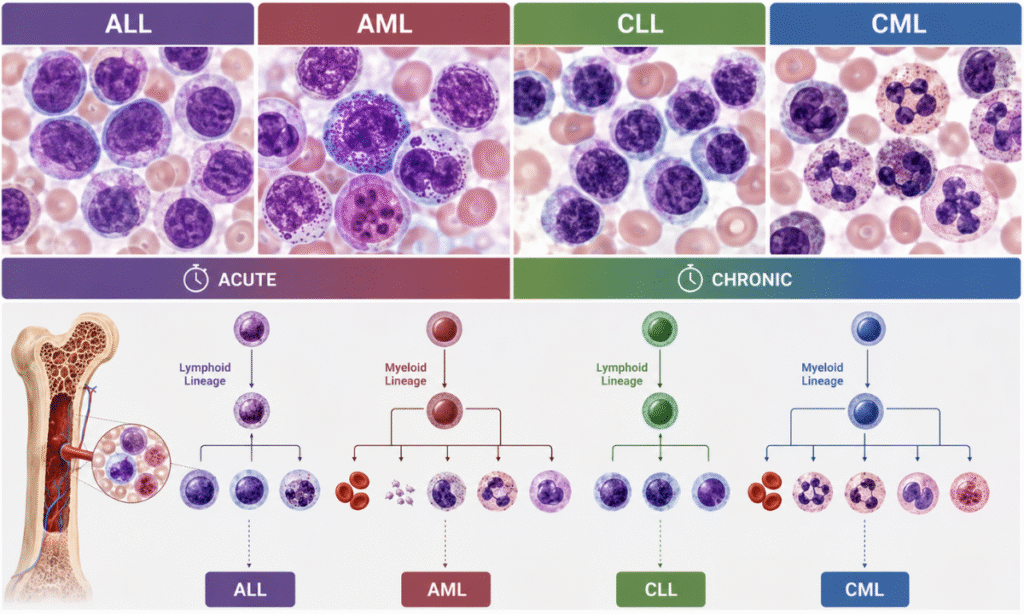
By combining these two axes, doctors categorize the disease into four main quadrants, each requiring a fundamentally different therapeutic approach:
- ALL (Acute Lymphoblastic Leukemia): The most common type in young children, though it can occur in adults. It requires rapid, highly structured protocols to achieve complete remission.
- AML (Acute Myeloid Leukemia): A rapidly progressing subtype more common in older adults, requiring highly intensive initial cell-clearing phases.
- CLL (Chronic Lymphocytic Leukemia): A slow-moving, indolent cancer predominantly found in older demographics, often managed with daily oral therapies rather than heavy hospital infusions.
- CML (Chronic Myeloid Leukemia): Highly characterized by a specific genetic anomaly known as the Philadelphia chromosome, which has become a primary target for modern medical science.
Understanding this biological breakdown shifts the medical conversation from a general fight against cancer to a highly specific, targeted operation. In the next section, we will examine how traditional, foundational treatments are used to clear out these abnormal cells and restore natural order to the bone marrow factory.
The Foundational Approach: Wiping the Slate Clean
Even with the incredible advancements in precision medicine, the traditional systemic approach remains the absolute backbone of care for rapidly progressing, aggressive blood cancers.
When dealing with acute subtypes (like ALL or AML), the bone marrow factory is completely overrun with malignant cells, halting the production of healthy red and white blood cells. The immediate clinical goal is to halt this dangerous overproduction, wipe the slate clean, and allow healthy, normal cells to repopulate the marrow.
For many patients, particularly those diagnosed with acute variants, Chemotherapy for leukemia acts as the critical first step in achieving this system reset.
Rather than a single, continuous stream of medication, this foundational treatment is highly strategic and delivered in distinct, carefully monitored phases designed to outmaneuver the cancer.
The Three Phases of Systemic Clearance
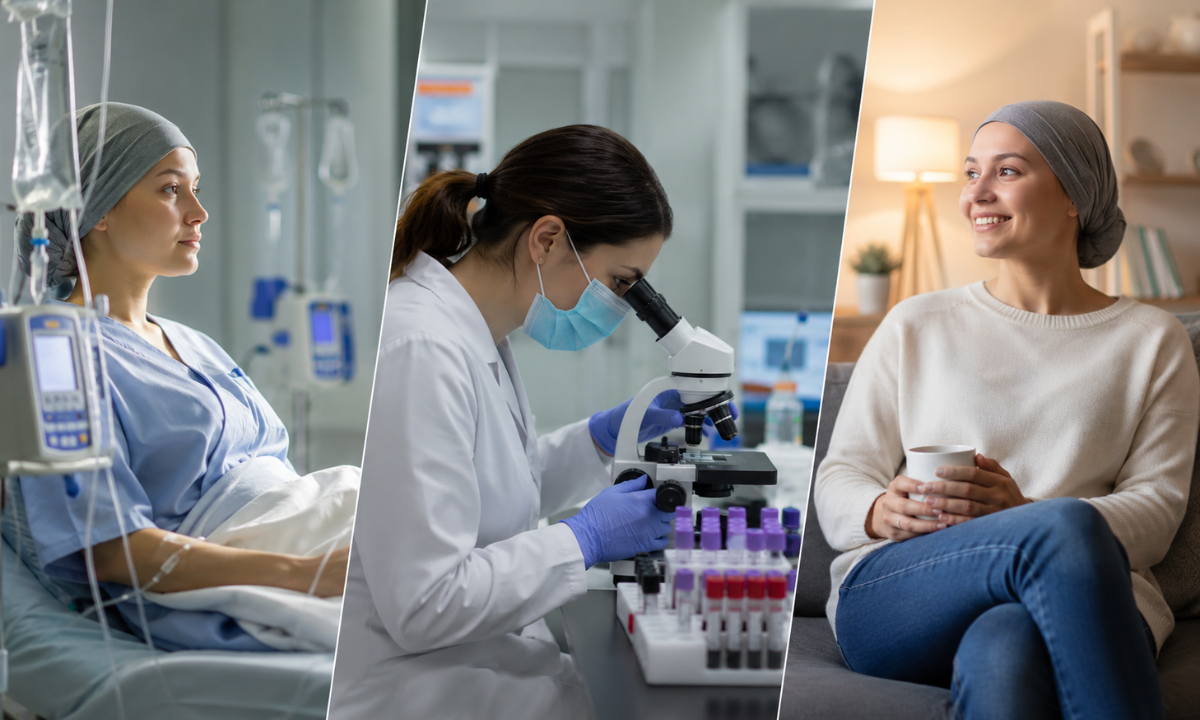
Phase 1: Induction Therapy (The Initial Sweep)
This is the most aggressive and intensive phase of treatment, typically requiring a hospital stay.
The primary objective is not a permanent cure, but rather a rapid, massive strike against the disease to achieve “complete remission.” During induction, high-dose medications circulate throughout the entire bloodstream to rapidly destroy the vast majority of leukemia cells in the blood and bone marrow, clearing the physical space needed for healthy blood cells to return.
Phase 2: Consolidation Therapy (Securing the Perimeter)
Reaching remission during the induction phase is a massive victory, but it does not mean the fight is over. Cancer cells are microscopic and highly resilient.
Consolidation therapy (often called post-remission therapy) begins once the patient’s blood counts return to normal. This phase uses different combinations or higher doses of medication to hunt down and eliminate any lingering, invisible leukemia cells that survived the initial sweep, drastically reducing the risk of an immediate relapse.
Phase 3: Maintenance Therapy (Long-Term Defense)
Commonly utilized in treatments for Acute Lymphoblastic Leukemia (ALL), this final phase involves taking lower, much more manageable doses of medication over an extended period, often spanning several years.
Maintenance therapy acts as an ongoing security patrol, ensuring the disease remains suppressed while allowing the patient to transition back into their normal, daily routine outside the hospital walls.
While these systemic treatments are highly effective at clearing out the initial burden of the disease, modern oncology has developed even smarter ways to keep specific, slow-moving leukemias at bay.
Let us transition from the broad-spectrum sweep of chemotherapy into the highly focused world of precision medicine.
The Precision Medicine Revolution

While foundational systemic therapies are essential for clearing out aggressive, fast-moving cases, they come with a significant biological drawback: they cannot easily distinguish between a rapidly dividing cancer cell and a rapidly dividing healthy cell, such as those found in your hair follicles or the lining of your stomach.
This lack of cellular discrimination is the primary reason why traditional treatments often cause severe, widespread side effects.
Modern oncology, however, has unlocked a vastly superior approach for specific hematological subtypes. Unlike traditional treatments that act as a broad, systemic sweep, targeted therapy for leukemia works more like a highly intelligent guided missile.
Analyzing the unique DNA and molecular structure of the malignant cells, oncologists can identify the exact genetic mutations that are signaling the cancer to grow, divide, and survive.
How Precision Therapy Changes the Game
Targeted drugs are specifically engineered to seek out these exact genetic abnormalities and shut them down at the molecular level, leaving the surrounding healthy cells largely untouched. This approach has completely transformed the landscape of hematology.
In fact, because it allows patients to actively manage their disease with daily oral medications rather than enduring heavy, continuous hospital infusions, many clinical experts now consider it the best treatment for CLL leukemia and other slow-moving, chronic variants.
To fully grasp why this shift is considered a clinical revolution in patient care, let us compare the traditional systemic approach with modern precision medicine:
| Clinical Feature | Traditional Systemic Therapy (Chemotherapy) | Precision Targeted Therapy |
|---|---|---|
| Primary Mechanism of Action | Attacks all rapidly dividing cells within the body, regardless of whether they are healthy or malignant. | Identifies and targets specific proteins, enzymes, or genetic mutations unique to the cancer cell. |
| Standard Method of Delivery | Typically administered intravenously (IV), requiring supervised hospital visits and infusion centers. | Often administered as a daily oral medication (pill or capsule) taken from the comfort of home. |
| Impact on Healthy Tissue | High collateral damage, leading to broad side effects (hair loss, severe nausea, extreme immune suppression). | Minimal collateral damage, resulting in much more manageable, targeted side effects that preserve daily energy. |
| Primary Clinical Application | The essential, aggressive first line of defense for fast-moving Acute Leukemias (ALL, AML). | The gold standard for managing Chronic Leukemias (CLL, CML) and specific, mutation-positive acute cases. |
The Impact on Chronic Leukemias
The immense success of precision medicine is most visibly demonstrated in the treatment of Chronic Myeloid Leukemia (CML). Historically, CML was incredibly difficult to manage long-term.
Today, medical science has identified that almost all CML cells contain an abnormal genetic swap resulting in the “Philadelphia chromosome.” Modern targeted therapies known as Tyrosine Kinase Inhibitors (TKIs) are designed to exclusively hunt down the abnormal protein created by this chromosome and physically turn it off.
As of this molecular breakthrough, patients with chronic leukemias are no longer fighting just to survive the month; they are successfully managing their condition much like one would manage hypertension or diabetes, living long, highly fulfilling lives with excellent daily mobility.
Cellular Reprogramming and System Resets
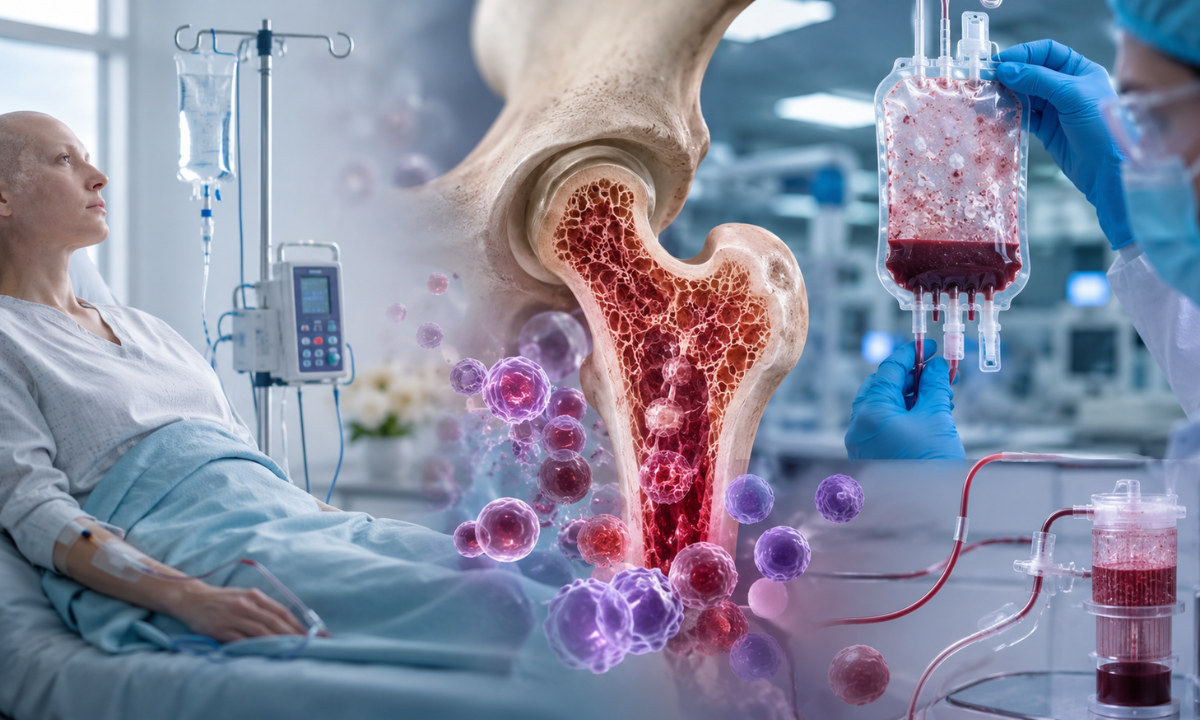
For some aggressive or high-risk leukemias, simply clearing out the malignant cells with medication is not enough to guarantee long-term survival. If the underlying bone marrow of the body’s blood-producing factory is fundamentally damaged or the disease shows a high probability of returning, oncologists must look beyond standard daily therapies.
In these critical, high-stakes cases, the ultimate goal is not just to suppress the cancer, but to completely replace the faulty biological system that allowed it to grow in the first place.
This is where advanced cellular reprogramming comes into play. You can think of a Stem cell transplant as a complete “factory reset” for your immune system and your blood supply. The objective is to entirely eradicate the diseased marrow and introduce highly functional, cancer-free blood-forming cells into the body, offering the absolute strongest potential for a permanent, lifelong cure.
How the Factory Reset Works
Historically, this intensive procedure was widely known as a bone marrow transplant, because the healthy replacement cells were harvested surgically directly from the pelvic bones of a donor.
Today, while the clinical goal remains the same, medical advancements allow these life-saving, immature stem cells to be collected smoothly and painlessly directly from the donor’s circulating bloodstream.
Because a transplant involves dismantling and rebuilding the patient’s entire immune system, it is a highly complex procedure executed in three distinct, heavily monitored phases:
1. The Conditioning Phase (Wiping the System): Before new cells can be introduced, the old, faulty system must be completely dismantled. The patient undergoes a highly intensive, concentrated course of chemotherapy (and sometimes full-body radiation). This destroys the leukemia cells and intentionally wipes out the patient’s existing, diseased bone marrow, creating a blank slate.
2. The Infusion (Installing the New Blueprint): Once the marrow is cleared, the healthy donor stem cells are introduced into the patient’s bloodstream through a standard central intravenous line, much like a regular blood transfusion.
3. Engraftment (The System Reboot): The newly introduced stem cells are biologically programmed to find their way inside the hollow centers of the patient’s bones. Over the next several weeks, they settle in and begin the incredible work of “engraftment”, manufacturing a brand new, healthy, and cancer-free supply of red blood cells, white blood cells, and platelets.
While undergoing this complete system reset requires a rigorous hospital stay inside specialized, ultra-sterile isolation wards to protect the patient while their new immune system boots up, the long-term payoff is monumental.
For many patients facing aggressive acute leukemias, this remarkable procedure represents the definitive bridge from a life-threatening diagnosis to being completely cancer-free.
Why Choose Dasappa Cancer Hospital for Your Recovery?
When facing a complex hematological diagnosis, the facility you choose dictates the trajectory of your entire treatment.
Treating blood cancer is fundamentally different from treating a solid tumor; it requires an incredibly controlled clinical environment, rapidly adaptive protocols, and a highly specialized medical team. This is precisely why patients seeking the Best Cancer Treatment Hospital in Bangalore consistently place their trust in Dasappa Cancer Hospital.
Under the guidance of Dr. Pandu Dasappa, a highly respected oncologist with over 27 years of clinical excellence, our facility has engineered a complete ecosystem specifically designed for complex cancer care:
- Multidisciplinary Tumor Boards: Your hematological profile is never reviewed by just one doctor. Our medical oncologists, hematologists, and pathologists collaborate to design a personalized, precision-targeted treatment pathway for your specific leukemia subtype.
- Specialized Hematology Infrastructure: Our 75+ bed super-speciality center is fully equipped with dedicated, state-of-the-art chemotherapy and immunotherapy units designed for maximum patient comfort during long infusion sessions.
- Ultra-Sterile Isolation Wards: Because leukemia and its treatments severely compromise the immune system, we maintain strictly controlled, ultra-hygienic isolation wards to safely protect our patients from external infections during their most vulnerable recovery phases.
Beating leukemia is a mental battle as much as a physical one. Our comprehensive care model includes dedicated nutritional counseling, pain management, and psychosocial support for both the patient and their family.
Conclusion
The word “leukemia” understandably carries immense emotional weight, but modern medical science has completely rewritten what this diagnosis means for your future. The days of reling solely on aggressive, generalized treatments are over. Today, with the advent of genetic profiling, targeted oral therapies, and advanced cellular transplants, many subtypes of leukemia are highly manageable, and in many cases, completely curable.
By taking decisive action and partnering with the Best Cancer Hospital in Bangalore, you are ensuring that your treatment is as unique and resilient as you are. Do not let fear dictate your next steps.
Reach out to our expert oncology team, establish your exact clinical baseline, and let us build your personalized roadmap to recovery together.