
Hearing that you need chemotherapy immediately brings lots of questions, but perhaps the most important one is simply: “How long is this going to take?” When trying to plan for your family, your career, and your daily life, the uncertainty of a cancer timeline can cause immense anxiety.
If you are preparing to undergo Chemotherapy Treatment in Bangalore, it is completely natural to want a definitive, circled end date on the calendar. However, modern cancer care does not operate on a rigid, one-size-fits-all schedule.
Instead of viewing your treatment timeline as an arbitrary block of time, it helps to understand it as a highly calculated, purposeful therapeutic roadmap.
The overall duration of your therapy is mathematically structured by your oncology team to balance two critical biological goals: aggressively eradicating malignant cells while giving your body’s healthy tissues the exact amount of time they need to recover.
Breaking down the terminology and understanding how these clinical schedules are actually built from the ground up, we can replace the fear of the unknown with predictability, structure, and a clear sense of control.
Medical Disclaimer
The timelines, cycle structures, and recovery expectations detailed in this article are strictly for educational and informational purposes. They do not constitute formal medical advice, a diagnostic consultation, or a guaranteed clinical timeline. Chemotherapy duration, specific drug protocols, and biological recovery times vary drastically based on your unique cancer diagnosis, stage, genetic profile, and real-time physical tolerance. Always consult directly with your medical oncologist and primary care physician regarding your personal treatment schedule and side-effect management. Never alter your medication, ignore professional medical warnings, or delay seeking urgent clinical care based on the contents of this guide.
Chemotherapy Timeline: Infusions vs. Cycles vs. Courses
When an oncologist first discusses your overall chemotherapy duration, the medical terminology can sometimes feel like a foreign language.
Patients often confuse the time spent in the hospital chair with the total length of their therapeutic journey. To truly understand your schedule, you must break the calendar down into its three core structural components.
Chemotherapy is rarely a continuous, daily medication. Instead, it is delivered through a highly strategic pattern of active medical strikes followed by mandatory biological rest.
The Three Pillars of Your Schedule
1. The Infusion (The Active Delivery):
This is the actual block of time you spend in the clinical suite receiving the intravenous (IV) medication.
Depending on the drug protocol, a single infusion session can last anywhere from 30 minutes to several hours.
2. The Cycle (The Biological Rhythm):
Cancer medications are administered in precisely timed chemotherapy cycles. A cycle encompasses both your active treatment days and the dedicated recovery days that follow.
For example, a standard “21-day cycle” might mean you receive the infusion on Day 1, and then rest for Days 2 through 21. This rest period is absolutely critical; it is the time your healthy white blood cells need to regenerate and repair before the next scheduled dose.
3. The Course (The Complete Protocol):
This is the overarching timeline. A full treatment course is made up of the total number of cycles required to achieve the clinical goal.
If your protocol requires six 21-day cycles, your entire course will take approximately four and a half months from start to finish.
Visualizing Your Treatment Calendar
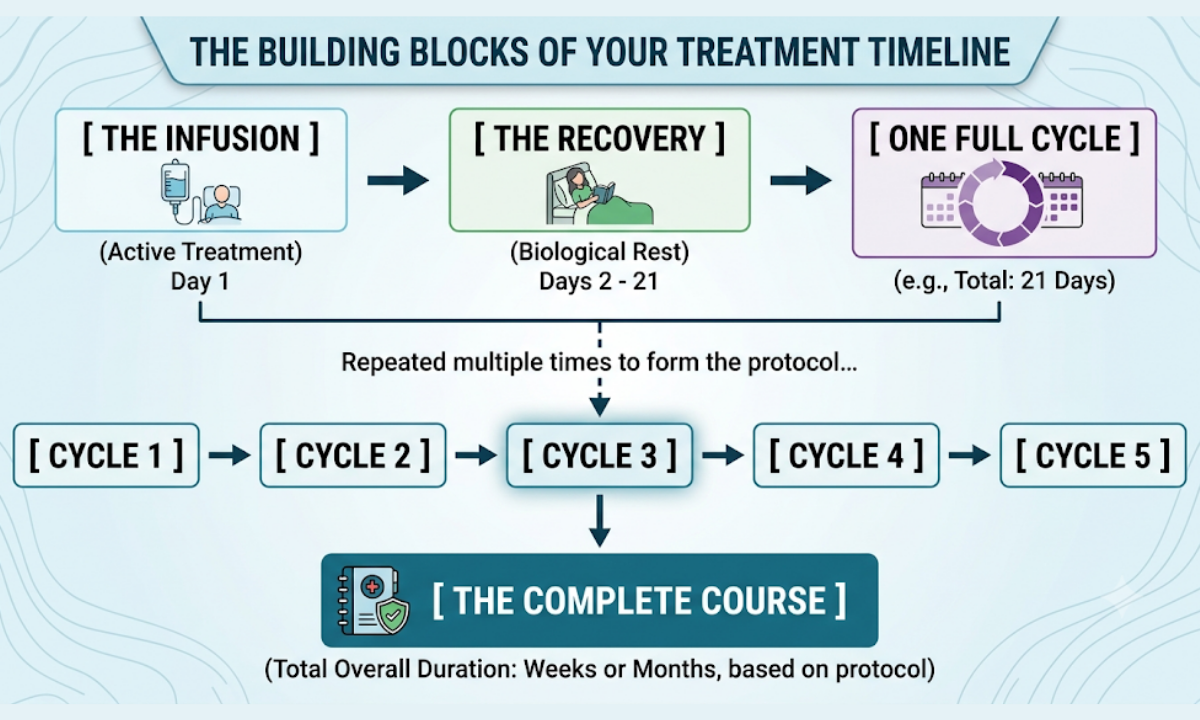
To help you picture exactly how these components stack together to form your personalized roadmap, consider the standard timeline matrix below:
Understanding this fundamental structure, the gaps between your hospital visits transform from confusing delays into purposeful, essential phases of your healing process. You are not just fighting the cancer on Day 1; your body is actively doing the vital work of recovery during the rest of the cycle.
Key Factors That Dictate Your Treatment Calendar

No two cancer diagnoses are the same, which is why your oncologist will never simply hand you a pre-printed, generic schedule off a shelf. The exact number of weeks or months you will spend in treatment is the result of a highly personalized clinical calculation.
When your tumor board convenes to design your roadmap, they evaluate several specific biological and strategic variables. These variables dictate not only which drugs are selected, but exactly how fast and how long they must be administered to achieve the maximum clinical benefit.
Here are the four primary clinical factors that will shape your unique timeline:
| Clinical Variable | How It Influences Your Schedule | Real-World Scenario |
|---|---|---|
| Therapeutic Intent | The timeline shifts based on the ultimate goal: shrinking a tumor before surgery (neoadjuvant), destroying microscopic cells after surgery (adjuvant), or controlling long-term growth (palliative). | A neoadjuvant course might be a strict 12-week schedule with a hard stop, designed specifically to prep the body for a scheduled surgical date. |
| Cancer Type & Stage | Fast-growing malignancies often require shorter, highly aggressive cycle rhythms, while early-stage tumors may require fewer total cycles compared to advanced, metastatic stages. | Early-stage localized colon cancer might require a definitive 3-month course, whereas chronic leukemias involve ongoing, long-term maintenance cycles. |
| Molecular & Genetic Profile | If your biopsy reveals specific genetic mutations, your team may combine traditional chemotherapy with targeted therapies, which operate on entirely different timetables. | A patient with HER2-positive breast cancer may finish aggressive chemotherapy in 4 months, but continue receiving targeted IV maintenance every 3 weeks for a full year. |
| Real-Time Biological Tolerance | Your timeline is not locked in stone. Oncologists continuously monitor your blood counts, liver function, and kidney health. If toxicity is too high, the clock is paused. | If your white blood cell count is dangerously low on Day 21, your doctor will actively delay “Cycle 2” by a week to ensure your immune system is safely recovered. |
Understanding these variables is crucial because it highlights an important truth about modern oncology: your treatment schedule is completely dynamic. It is actively adapted and tailored in real-time to prioritize your immediate safety and long-term survival.
On the Day: What to Expect Inside the Infusion Suite
The anticipation leading up to your very first infusion is almost always worse than the experience. Many patients arrive at the oncology ward expecting a highly stressful, intense environment, only to find a quiet, climate-controlled room filled with reclining chairs, warm blankets, and people quietly reading, listening to podcasts, or sleeping.
To remove the anxiety of the unknown, it helps to understand exactly how the clock operates once you sit in the chair. While the total hours spent in the suite depend entirely on your specific drug protocol, the rhythm of the day almost always follows a highly predictable, structured four-step process.
The Infusion Day Breakdown
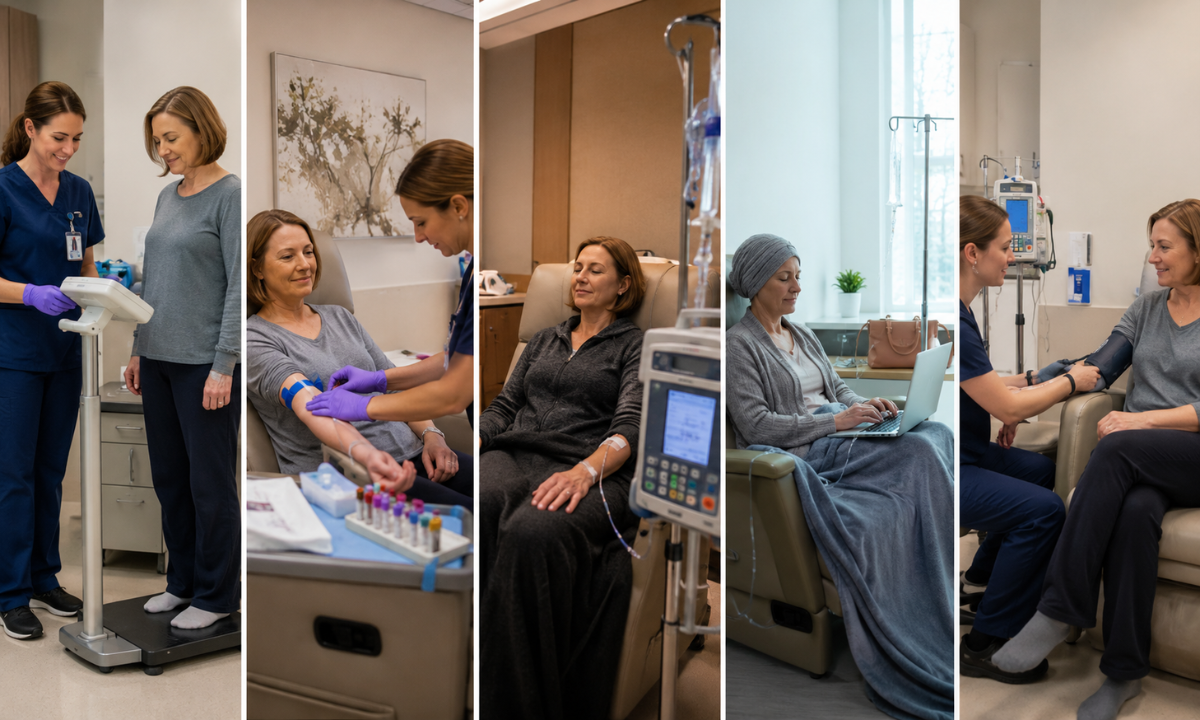
1. The “Green Light” Phase (30 to 60 Minutes):
Before a single drop of chemotherapy is mixed by the pharmacy, your medical team must ensure your body is biologically ready to handle the treatment.
- Vitals & Precise Weigh-in: Your exact weight is recorded because chemotherapy dosages are calculated down to the milligram based on your Body Surface Area (BSA) on that specific day.
- Rapid Blood Draw: A quick blood test is run to check your complete blood count (CBC) and liver/kidney function. If your white blood cell counts are too low, the oncologist will safely delay the infusion.
2. The Pre-Medication Shield (30 to 45 Minutes):
Chemotherapy is never administered without an internal defense system. Before the active cancer drugs begin, you will receive a specialized intravenous cocktail of “pre-meds.”
- The Cocktail: This typically includes highly effective anti-nausea medications, anti-inflammatories, steroids to prevent allergic reactions, and sometimes mild sedatives.
- The Sensation: You may feel instantly sleepy, deeply relaxed, or experience a temporary metallic taste or flush in your cheeks.
3. The Active Infusion (1 to 6+ Hours):
Once the pre-medications have primed and protected your system, the active chemotherapy drugs are connected to your IV or implanted port.
- The Experience: You will generally not feel the drugs entering your body. There is no sudden shock to the system; the medication is meticulously calibrated by digital pumps to drip slowly and silently.
- Your Role: This is entirely passive time. You are encouraged to eat light snacks, work on your laptop, watch movies, or simply sleep.
4. The Flush and Observation (30 Minutes):
After the final bag of chemotherapy is empty, the IV line is flushed with a sterile saline solution to ensure every drop of the medication has been delivered. The nursing staff will monitor your vitals for a brief period to ensure your blood pressure remains stable before safely discharging you.
Clinical Pro-Tip for Infusion Day: Hydration is your greatest tactical advantage. Drink plenty of water the day before and the morning of your appointment. Well-hydrated veins make IV insertion incredibly easy and painless, and cellular hydration helps your kidneys effectively process and flush the drug byproducts once you return home.
Life at Home: Patient Care and Biological Recovery Time

When you leave the hospital, the active infusion phase is complete, but the most critical biological work is just beginning.
Proper patient care during chemotherapy requires a deep understanding of what happens inside your body in the days and weeks following an appointment. Healing does not happen in the hospital chair; it happens at home.
During this phase, your healthy cells are working tirelessly to metabolize the drugs, repair tissue damage, and regenerate your immune system before the next scheduled cycle.
The Short-Term Timeline: Understanding Your “Nadir”
Many patients are surprised to find that they actually feel quite well on the day of their infusion, thanks to the powerful anti-nausea pre-medications and steroids. The true physical impact of the treatment usually operates on a delayed timeline.
To manage your energy effectively at home, you must plan around a concept oncologists call the “nadir.” The nadir refers to the specific point in your cycle when your white blood cell count drops to its absolute lowest, leaving your body temporarily exhausted and highly vulnerable to infection.
| Cycle Timeline (Standard 21-Day Cycle) | Physical Expectation | Strategic Patient Care Focus |
|---|---|---|
| Days 1 to 3 (The Acute Phase) | High energy due to steroids, followed by a potential “crash” as medications wear off. Mild nausea or fatigue begins. | Focus heavily on hydration. Flush the kidneys by drinking plenty of water, broths, and clear fluids. |
| Days 7 to 14 (The Nadir Phase) | Blood counts hit their lowest point. This is when systemic fatigue, mouth sores, and physical exhaustion typically peak. | Strict rest and infection prevention. Avoid large crowds, eliminate raw foods, and prioritize high-quality protein and sleep. |
| Days 15 to 21 (The Rebound Phase) | Bone marrow successfully regenerates new blood cells. Energy levels steadily rise, and appetite returns to normal. | Rebuild internal reserves. Eat dense, nutritious meals to prepare your physical baseline for the next upcoming cycle. |
The Long-Term Horizon: Post-Treatment Recovery
Ringing the bell after your final cycle is an incredible milestone, but it is important to manage your expectations regarding your overall chemotherapy recovery time. Once the final drop of medication is delivered, the drugs do not instantly vanish from your system.
It takes time for your bone marrow to fully restabilize its production lines and for your nervous system to repair minor damages (such as chemotherapy-induced neuropathy or “chemo brain”).
While your immediate side effects like nausea will dissipate within a few weeks, full structural cellular recovery, regaining your pre-diagnosis stamina, hair regrowth, and complete immune strength is a gradual process that typically takes anywhere from three to twelve months.
The Caregiver’s Role: Recovery at home is not a solo mission. Caregivers play a vital role during the nadir phase by managing food safety, tracking daily temperatures (as a fever during the nadir requires immediate medical attention), and providing emotional support when the cumulative fatigue of the cycles feels overwhelming.
Why Choose Dasappa Cancer Hospital?
When you are committing weeks or months of your life to a chemotherapy timeline, the environment and clinical team you choose will profoundly impact your physical comfort and emotional resilience.
We at Dasappa Cancer Hospital do not just administer medication; we manage your entire recovery ecosystem. Patients actively seeking the Best Cancer Treatment Hospital in Bangalore trust our facility because we remove the logistical burdens of cancer care, allowing you to focus entirely on your biological healing.
Under the expert guidance of Dr Pandu Dasappa and our multidisciplinary oncology board, our 75+ bed super-specialty center is engineered to make your treatment calendar as smooth and predictable as possible:
- Zero-Wait Scheduling: We respect your time and your physical energy. Our dedicated scheduling coordinators ensure your blood work, oncologist consultations, and infusion appointments are seamlessly aligned to prevent exhausting wait times.
- Advanced Infusion Infrastructure: Our specialized, ultra-sterile chemotherapy suites are designed for maximum patient comfort, featuring climate-controlled zones, reclining recovery chairs, and dedicated oncology nurses monitoring your active infusion every step of the way.
- Proactive Side-Effect Management: We do not wait for the “nadir” to hit before taking action. Our integrated clinical dietitians and palliative care teams work proactively to manage your nausea, protect your immune system, and keep your treatment timeline safely on track.
You will never be left wondering about your progress. After every cycle, our team reviews your blood counts and biological tolerance, keeping you and your family fully informed about exactly where you stand on your roadmap to recovery.
Conclusion
A chemotherapy timeline can initially feel like an endless stretch of uncertainty, but it is ultimately a calculated, finite process designed to save your life. By understanding the mechanical rhythm of your infusions, the necessary biological rest of your cycles, and the specific clinical goals of your overall course, you take the power back from the diagnosis. The gaps between your hospital visits are not delays; they are the active, vital days where your body is doing the heavy lifting of recovery.
When you partner with the Best Cancer Hospital in Bangalore, you do not have to navigate this complex calendar alone. Trust your timeline to the experts at Dasappa Cancer Hospital, focus on protecting your daily energy, and let us help you confidently cross the finish line of your final cycle.