A diagnosis of “Advanced Cancer” (Stage IV) is undeniably life-altering, often evoking fears that the condition is untreatable.
However, in modern oncology, the term “Advanced” is not synonymous with “Terminal.” Clinically, Advanced Cancer typically refers to metastatic disease—where cancer cells have spread from the primary site (e.g., Breast) to distant organs (e.g., Bones, Lungs, or Liver).
While it is true that Stage IV solid tumors are rarely “cured” in the traditional sense, a paradigm shift has occurred.
With the advent of Precision Medicine, many advanced cancers are now managed as Chronic Diseases—similar to diabetes or hypertension.
The goal of Treatment Of Advanced Cancer has evolved from purely “End-of-Life” care to “Progression-Free Survival” (PFS), where patients can live for years with a good quality of life while on maintenance therapy.
This article provides an evidence-based overview of how Oncological Treatment for Advanced Cancer is structured, focusing on the transition from “Curative Intent” to “Palliative Intent.”
The Goals of Therapy: “Curative” vs. “Palliative” Intent
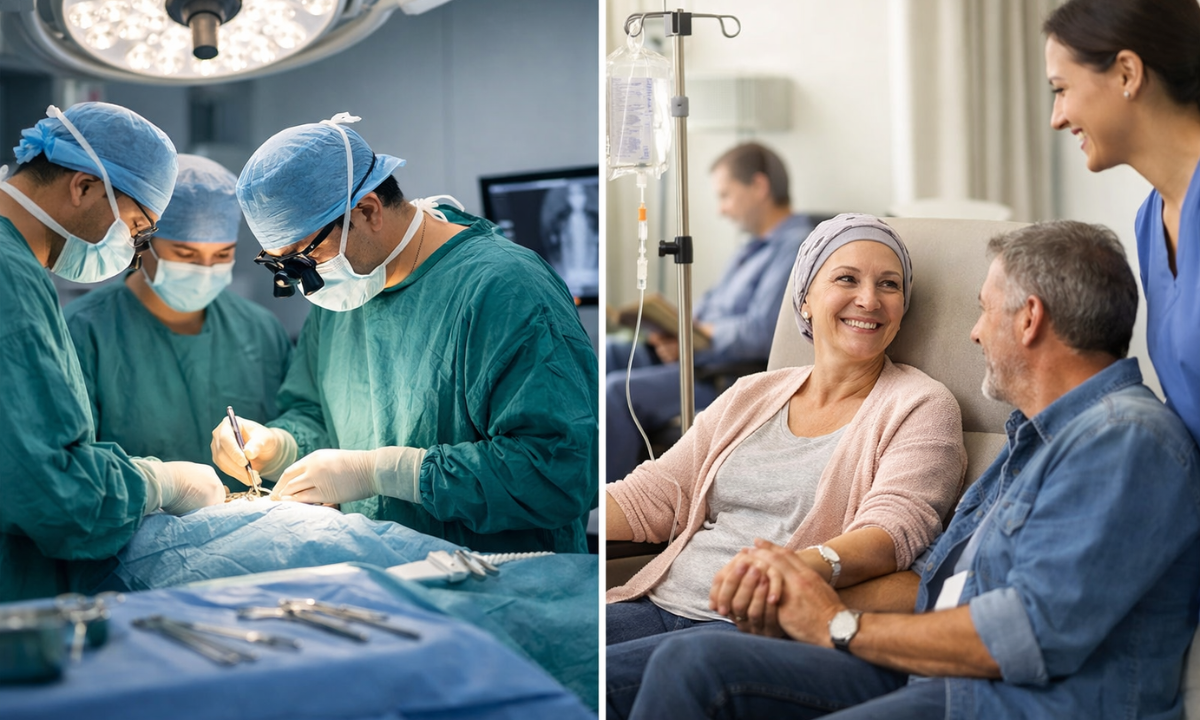
Defining what success looks like.
To navigate Advanced Stage Cancer Therapy, one must understand the medical intent behind the prescription. In oncology, treatments are broadly classified into two goals:
- Curative Intent:
- Goal: To completely eradicate the cancer and prevent it from ever coming back.
- Context: Usually reserved for early-stage (Stage I, II, and some III) cancers where the tumor is localized.
- Palliative Intent:
- Goal: To extend life (Life Prolongation) and improve Quality of Life (Symptom Control).
- Context: This is the standard for Advanced Cancer Treatment.
- The Metric: Doctors measure success not by “cure,” but by Progression-Free Survival (PFS)—the length of time a patient lives with the disease without it getting worse.
Important Distinction: “Palliative Intent” does not mean the doctors are giving up. It means the strategy has changed. Instead of high-dose, toxic treatments that might destroy the patient’s remaining strength, we use calculated doses to suppress the tumor burden while ensuring the patient can still eat, sleep, and interact with their family.
Systemic Therapies
Treating the whole body to contain the spread.
Since advanced cancer has spread beyond a single location, local treatments (like surgery) are rarely sufficient on their own.
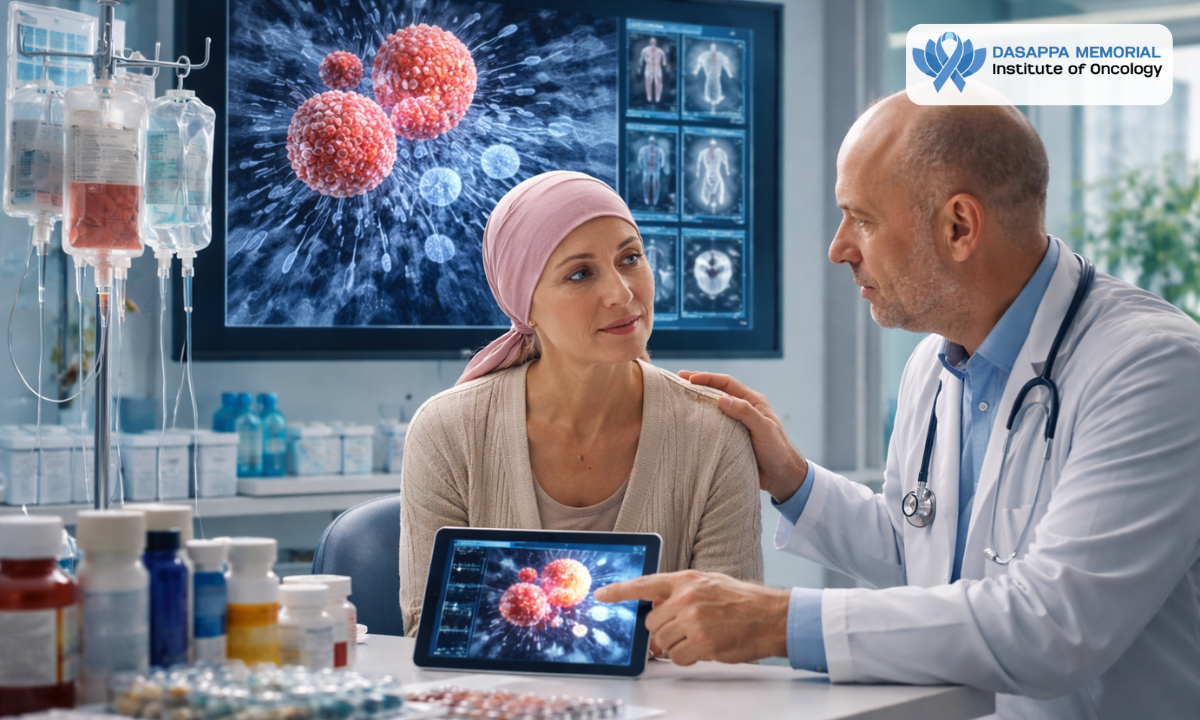
The backbone of Advanced Stage Cancer Therapy is Systemic Therapy—drugs that travel through the bloodstream to reach cancer cells wherever they are hiding.
Modern oncology utilizes three main pillars:
A. Chemotherapy (Cytoreduction)
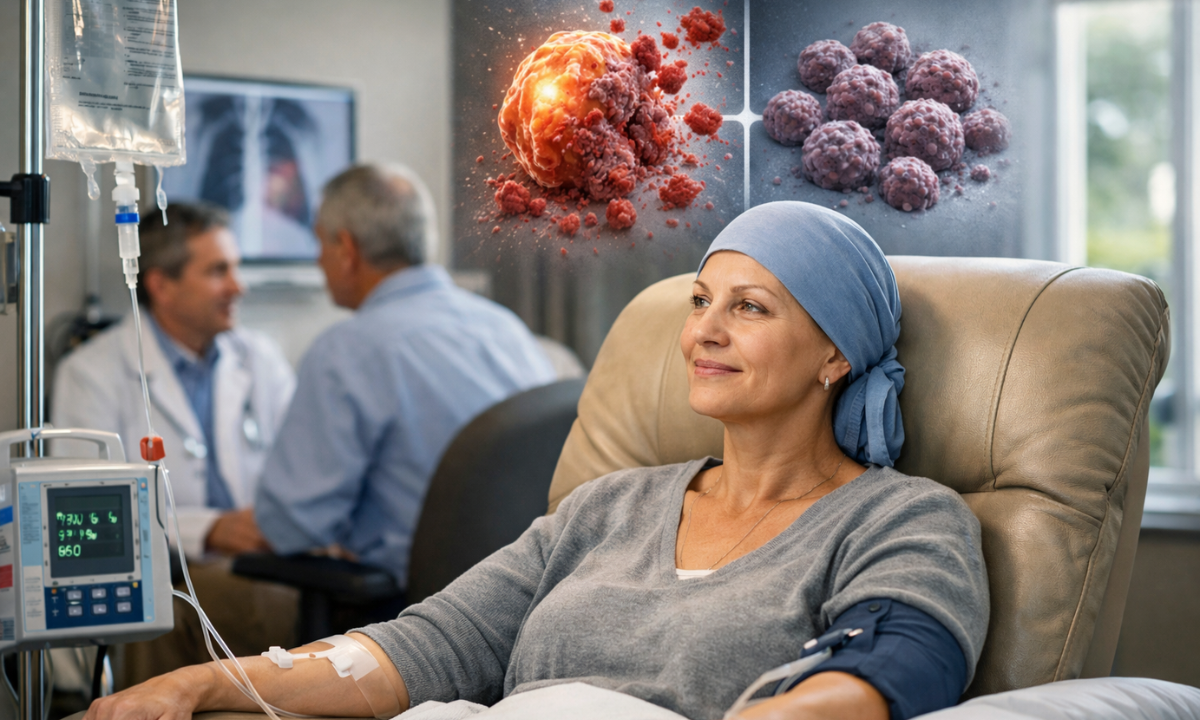
While often feared, chemotherapy remains a potent tool for “Cytoreduction” (reducing the number of cancer cells).
It is often used to shrink tumors rapidly to relieve symptoms (e.g., shrinking a lung tumor to help a patient breathe better).
In some cases, lower doses are given over a longer period (Maintenance Chemo) to keep the disease “asleep” or stable.
B. Targeted Therapy (Precision Medicine)
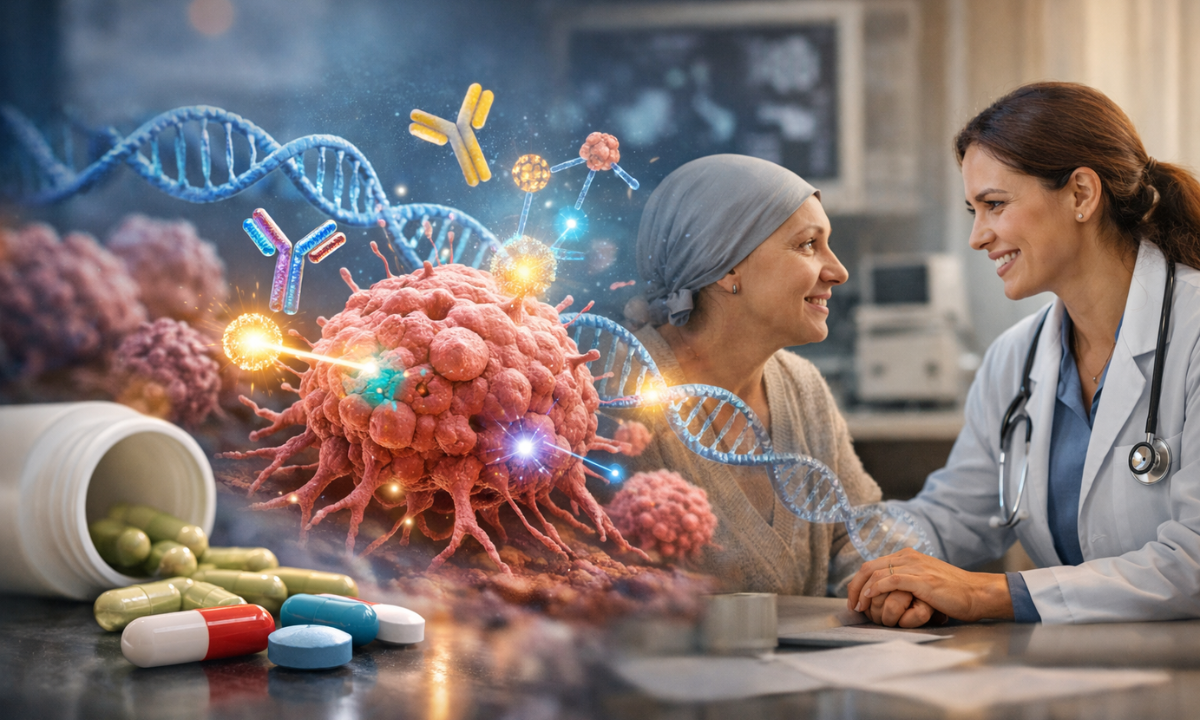
This is the game-changer for many Stage IV patients. Unlike chemo, which kills all fast-growing cells, targeted therapy attacks specific genetic mutations that drive the cancer’s growth.
If your tumor tests positive for a specific mutation (e.g., EGFR in Lung Cancer or HER2 in Breast Cancer), oral pills can often block this signal.
These drugs are generally less toxic than chemotherapy and can turn aggressive cancers into manageable chronic conditions for years.
C. Immunotherapy
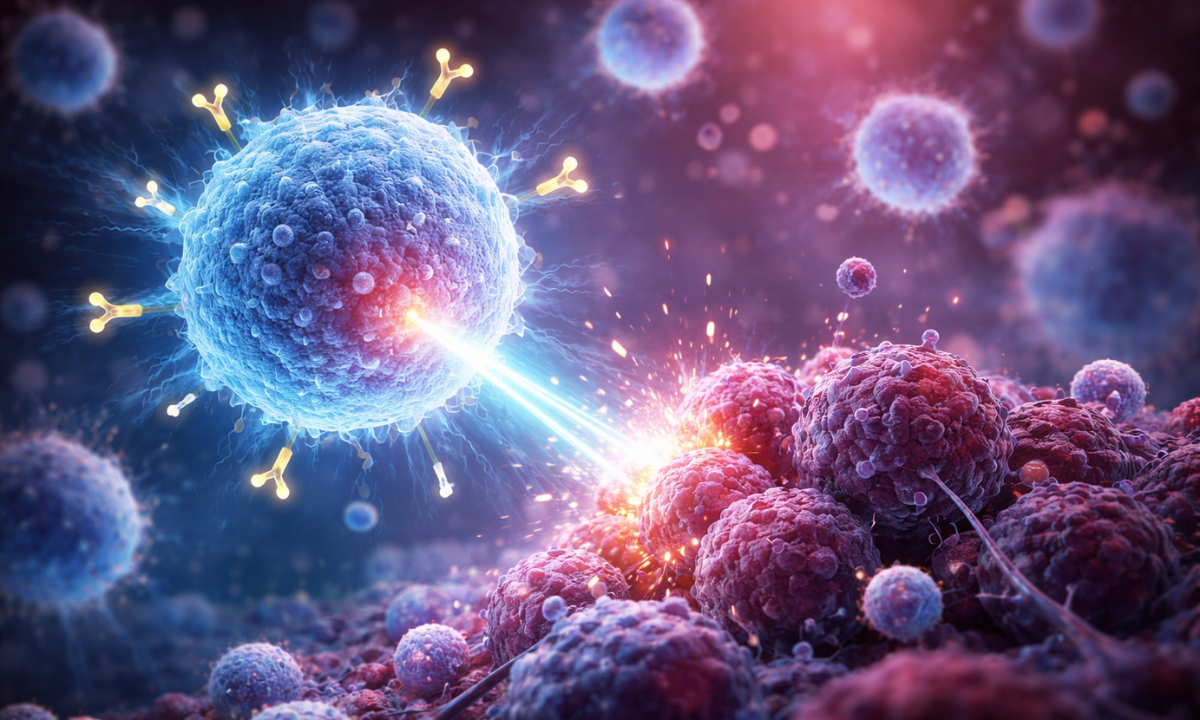
Advanced cancers often survive by putting the immune system to sleep. Immunotherapy drugs (Checkpoint Inhibitors) “wake up” the patient’s T-Cells to recognize and attack the cancer.
While it doesn’t work for everyone, for those who respond, it can offer durable, long-term control even in Stage IV disease.
The Role of Surgery & Radiation in Stage IV (Palliative)

A common question patients ask a Surgical oncologist in Bangalore is, “Why operate if the cancer has already spread?”
In advanced stages, surgery and radiation are no longer used to cure the disease, but they play a critical role in Palliative Care—specifically for symptom relief and preventing catastrophic complications.
Common Palliative Interventions:
1. Palliative Resection (Toilet Mastectomy / Bypass):
If a tumor is causing a blockage (e.g., in the colon or stomach), surgeons may operate to bypass the obstruction so the patient can eat normally.
In breast cancer, a fungating (ulcerated) tumor may be removed simply to improve hygiene and reduce pain, even if metastasis exists elsewhere.
2. Palliative Radiation:
| Bone Metastasis: When cancer spreads to the bones, it can be excruciatingly painful and weaken the bone structure. A short course of radiation can shrink these deposits, significantly reducing pain and preventing fractures. | Brain Metastasis: Targeted radiation (Stereotactic Radiosurgery) can treat spots in the brain to prevent seizures and preserve cognitive function. |
Palliative Care: The Backbone of Advanced Treatment

It is not about dying; it is about living well.
There is a widespread and dangerous misconception in India that Palliative Cancer Treatment is synonymous with “Hospice” or “End-of-Life Care.”
This belief often leads patients to refuse symptom relief because they fear it means their doctors are “giving up.”
In modern oncology, this is factually incorrect. Palliative Care (clinically referred to as Supportive Oncology) is a specialized medical discipline focused on relieving the symptoms and stress of a serious illness.
The objective is not to cure the disease, but to manage the side effects of the disease and its treatment.
The Golden Rule: In advanced stages, Palliative Care is provided concurrently (at the same time) with active curative treatments like chemotherapy or immunotherapy.
Table: Understanding the Clinical Distinction
| Feature | Palliative Care (Supportive Oncology) | Hospice Care |
|---|---|---|
| Timing | Starts at diagnosis. Continues for years alongside active treatment (Chemo/Radiation). | Starts when curative treatment is stopped, and life expectancy is typically < 6 months. |
| Primary Goal | To manage side effects (nausea, pain, fatigue) so the patient has the physical strength to continue fighting the cancer. | To provide comfort, dignity, and peace during the final phase of life. |
| The Team | Medical Oncologist + Pain Specialist + Nutritionist. | Hospice Nurses + Social Workers + Chaplains. |
| Location | Hospital, Outpatient Clinic, or Home. | Usually Home or a dedicated Hospice facility. |
The Science of Pain Management (The WHO Ladder). A critical component of Oncological Treatment for Advanced Cancer is pain control. Unmanaged pain suppresses the immune system and causes depression. We follow the WHO Analgesic Ladder protocol:
- Step 1 (Mild Pain): Non-opioids (e.g., Paracetamol, NSAIDs).
- Step 2 (Moderate Pain): Weak opioids (e.g., Tramadol, Codeine).
- Step 3 (Severe Pain): Strong opioids (e.g., Morphine, Fentanyl Patches).
By integrating palliative care early, studies show that patients not only live better but often live longer because their bodies are not exhausted by pain and malnutrition.
Managing Quality of Life (QoL)
In the Treatment Of Advanced Cancer, the definition of “success” shifts. It is no longer solely about Radiological Response (how much the tumor shrinks on a CT scan) but about Clinical Benefit (how the patient feels and functions).
A treatment that shrinks a tumor by 20% but leaves the patient bedridden with severe toxicity is often considered a clinical failure.
To avoid this, top oncologists rely on specific scientific metrics:
A. The ECOG Performance Status
Before prescribing aggressive chemotherapy, a responsible cancer treatment hospital in Bangalore will evaluate the patient’s “Performance Status” using the ECOG (Eastern Cooperative Oncology Group) scale. This objective score determines if a patient can tolerate treatment.
- ECOG 0-1: Fully active; able to carry out light work. (Candidate for standard therapy).
- ECOG 2: Ambulatory and capable of self-care but unable to work. (Candidate for modified/gentle therapy).
- ECOG 3-4: Confined to bed/chair for >50% of waking hours. (Focus shifts entirely to supportive care to avoid treatment-induced harm).
B. The Therapeutic Index (Risk vs. Benefit)
Every drug has a “cost” to the body. Oncologists constantly evaluate the Therapeutic Index—the ratio between the toxic dose and the therapeutic dose.
- The Scenario: If a drug causes severe Neuropathy (nerve damage) or Grade 4 Neutropenia (zero immunity) for a marginal life extension of a few weeks, the “Net Benefit” is negative.
- The Clinical Decision: In such cases, the medical team may recommend a “Drug Holiday” (a structured break from treatment) to allow the body to recover, ensuring the patient has the energy to attend family events and enjoy their remaining time.
C. Managing Cancer Cachexia
In advanced stages, patients often lose weight rapidly despite eating. This is not simple starvation; it is Cancer Cachexia—a metabolic syndrome where the tumor releases cytokines that break down the patient’s muscle mass.
- The Intervention: Simple “eating more” doesn’t fix this. It requires medical nutrition therapy (high-protein, high-calorie supplementation) and specific medications (like Megestrol or Corticosteroids) managed by a clinical nutritionist.
The Dasappa Approach: We believe that Advanced Stage Cancer Therapy must add life to your days, not just days to your life. Our protocols strictly adhere to minimizing toxicity while maximizing control.
Conclusion
A diagnosis of advanced cancer changes the landscape, but it does not close the road.
With the advent of Targeted Therapies and Immunotherapy, the definition of “Advanced” is evolving.
Many patients are now managing their condition as a chronic illness, maintaining active, fulfilling lives for far longer than was possible a decade ago.
The key to navigating this journey is a Multidisciplinary Team. You need a Medical Oncologist to fight the cells, a Surgical oncologist in Bangalore to manage complications, and a Palliative Specialist to protect your quality of life.
Finding the Right Partner If you are looking for a cancer hospital in Bangalore that understands the nuances of advanced stage care—balancing aggressive science with compassionate support—Dasappa connects you with the region’s leading experts.
Do not walk this path alone.